In the dynamic agricultural landscape of Kenya, the dream of starting a poultry farm often faces a formidable barrier: capital. Many aspiring farmers, eager to tap into the lucrative poultry market, find themselves halted by the perceived high initial investment in chicks, feed, housing, and equipment. However, what if we told you that establishing a successful poultry venture with minimal to zero capital is not just a pipe dream, but a tangible reality achievable through innovative strategies and unwavering determination? This guide is for every poultry farmer, feed maker, poultry company, veterinarian, and student who believes in the power of resourcefulness. We'll explore practical, actionable methods to kickstart your poultry farm without a hefty bankroll, drawing inspiration from local successes.
The Kenyan Poultry Dream: Overcoming the Capital Hurdle
Kenya's demand for poultry products, both meat and eggs, continues to grow. This presents a golden opportunity for entrepreneurs. The challenge, however, is often the entry cost. Traditional models emphasize significant upfront investment. Our focus today is on shifting that paradigm, demonstrating how strategic thinking can circumvent financial limitations.
1. Harnessing the Power of Bartering: Your Hidden Currency
Bartering, an age-old practice of exchanging goods or services without money, is an underutilized resource in modern poultry farming. For zero-capital startups, it can be a game-changer.
Chicks for Labor/Produce: Do you have a skill that a local established farmer might need? Perhaps assistance with farm work, marketing their produce, or even providing other agricultural products you might have. You could exchange your labor or crops for a batch of day-old chicks or fertile eggs.
Feed for Services: Feed is often the largest recurring cost. Approach local feed millers or larger farmers and offer services like help with deliveries, farm maintenance, or even promoting their products within your community in exchange for feed supplies on credit or as a direct barter.
Equipment Barter: Old farm equipment, unused tools, or even surplus crops can be traded for essential items like feeders, waterers, or fencing materials. Engage with your community and other farmers to identify potential exchange opportunities.
By creatively leveraging what you do have – your skills, time, and other resources – you can significantly reduce the need for cash transactions for critical inputs.
2. Ingenious Coop Construction: Recycled Materials for Sustainable Housing
The cost of constructing a new chicken coop can be substantial. However, with a little creativity, recycled and readily available materials can be transformed into sturdy, safe, and functional housing for your flock. This approach not only saves money but also promotes environmental sustainability.
Pallet Power: Wooden pallets are abundant and often discarded by businesses. They can be dismantled and used to construct frames, walls, and nesting boxes. Many examples of robust chicken coops built almost entirely from pallets exist in Kenya.
Reclaimed Timber and Iron Sheets: Scout for discarded timber from construction sites (with permission, of course) or old iron sheets from renovation projects. These can be repurposed for roofing and additional structural support.
Plastic Bottles and Tyres: For insulation or foundational elements, plastic bottles filled with sand or old tyres can be surprisingly effective.
While less common for the main structure, they can play a role in creating a more comfortable environment or elevating the coop to protect against pests.
Mud and Wattle: Embrace traditional, cost-effective building techniques like mud and wattle for walls, which offer excellent insulation properties, especially for indigenous chicken breeds.
Remember, the key is to ensure the coop is secure against predators, well-ventilated, and provides adequate space per bird for health and productivity.
3. Unlocking Support: Grants and Programs from KNCCI and Other Organizations
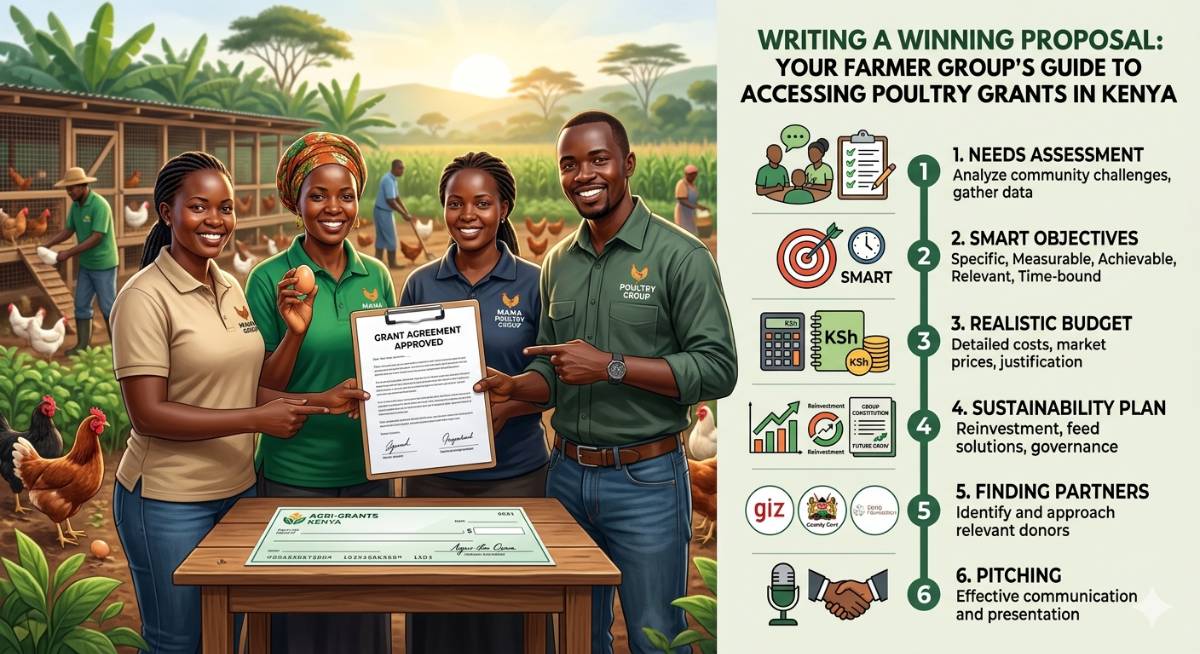
While direct "zero-capital grants" are rare, various organizations, including the Kenya National Chamber of Commerce and Industry (KNCCI), offer support and financial assistance programs designed to empower Micro, Small, and Medium Enterprises (MSMEs), including those in poultry farming. These often come in the form of low-interest loans, technical assistance, training, and business development services.
KNCCI Membership and Programs: Become a member of KNCCI. Membership can open doors to various programs like the "Jiinue Growth Program" or similar initiatives that provide business development support, networking opportunities, and access to funding partnerships. While not always direct grants, these schemes can offer favorable loan terms or matching funds that significantly ease financial burdens.
Government Initiatives: Research government-backed agricultural funds or youth empowerment programs that often have components for livestock development. These might include grants for specific agricultural innovations or subsidized inputs.
NGOs and Development Agencies: Many non-governmental organizations and international development agencies focus on supporting rural livelihoods and food security. They often provide training, starter kits (which can include chicks or initial feed), or grants to eligible community groups or individuals.
Actively seek out information from these organizations. Attend their workshops, apply for their programs, and network relentlessly. Persistence is crucial.
4. Learning from Success: The Gladys-Inspired Farm Model
Across Kenya, stories of resilient entrepreneurs turning adversity into success abound. Consider a composite "Gladys-inspired farm model," representing countless farmers who started small and grew big through smart, capital-light strategies.
Gladys, for instance, began with a handful of Kienyeji chickens, acquired through a barter system – perhaps exchanging her weaving skills for mature birds. Her initial coop was a testament to ingenuity, built from discarded timber and plastic sheets from a nearby construction site. Instead of buying expensive commercial feed exclusively, she supplemented her chickens' diet with kitchen scraps, foraged greens, and locally sourced maize husks, trading some of her homegrown vegetables with a local miller for maize. As her flock grew, so did her knowledge. She meticulously documented her progress, sought advice from agricultural extension officers, and slowly expanded her enterprise. When she needed to scale up, she leveraged her strong community ties and a positive track record to secure a small, interest-free loan from a women's group, or perhaps participated in a KNCCI-supported micro-financing program. Her success wasn't instantaneous but a result of consistent effort, smart resource utilization, and community engagement. Today, her farm is a beacon of self-sufficiency, supplying eggs and meat to her village and beyond.
This model underscores the importance of:
Starting Small: Don't aim for a large commercial farm immediately. Begin with what you can manage and grow organically.
Maximizing Local Resources: Utilize everything at your disposal, from local plant matter for feed supplements to discarded materials for infrastructure.
Community Engagement: Build relationships with neighbors, other farmers, and local businesses. These connections can lead to invaluable bartering opportunities, knowledge sharing, and even financial support.
Continuous Learning: Stay updated on best practices in poultry management, disease prevention, and market trends.
Key Takeaways for Your Zero-Capital Poultry Journey
Starting a poultry farm with zero capital in Kenya requires grit, creativity, and a proactive approach. It's about seeing resources where others see waste and opportunities where others see obstacles. Embrace the principles of bartering, creative housing, and leveraging institutional support. Your journey might begin small, but with dedication and smart strategies, it can flourish into a thriving, profitable enterprise that contributes significantly to your livelihood and the nation's food security.
Are you ready to turn your poultry dreams into a zero-capital reality? Share your ideas and experiences in the comments below!
Poultry Market Kenya is a dedicated poultry farming and agribusiness blog focused on empowering farmers, traders, and agri-entrepreneurs across Kenya. We publish practical, data-driven content covering poultry production, disease management, feeding strategies, housing, equipment reviews, and market insights.
Our goal is to bridge the gap between traditional poultry farming practices and modern, profitable methods by providing reliable information, expert guidance, and real-world case studies.