Overview: Building a Poultry Farm with Zero Capital in Kenya
Dreaming of starting a poultry farm but deterred by the high initial investment? This guide is for you. Zero capital poultry farming in Kenya using recycled materials is not just a pipe dream; it's a viable, sustainable, and increasingly popular approach for aspiring farmers. Traditional poultry farming can be capital-intensive, with coop construction alone easily costing KSh 50,000 or more. However, by embracing ingenuity and resourcefulness, it's possible to build a functional and comfortable poultry setup for a fraction of that cost—often between KSh 500 and KSh 2,000 for basic structures.
This article outlines a step-by-step approach to establishing a thriving poultry enterprise using readily available recycled and free materials, proving that a lack of funds doesn't have to be a barrier to entry. We’ll explore everything from sourcing materials to creative coop designs, equipment hacks, and innovative funding strategies.
Sourcing Materials: Your Treasure Hunt Begins
The foundation of zero capital poultry farming lies in your ability to identify and acquire free or nearly free materials. Think of it as a treasure hunt where discarded items become valuable assets. Key sources include:
Salvage Yards and Demolition Sites: Often a goldmine for timber scraps, corrugated iron sheets, wires, pipes, and metal frames.
Always seek permission before collecting materials.
Farmers' Waste: Speak to local farmers; they frequently discard old fencing, pallets, plastic drums, and even worn-out feed bags that can be repurposed.
Community Collections: Encourage neighbors to donate old tires, plastic bottles, cardboard boxes, and fabric scraps. These can be transformed into walls, roofs, and insulation.
Local Businesses: Shops and factories often have excess packaging materials like sturdy cardboard, wooden crates, and plastic containers.
Remember, the goal is to see potential where others see waste. Safety should always be a priority; ensure any collected materials are free from hazardous chemicals or sharp edges before use.
Coop Design & Build: Creative Solutions for Housing
Designing a DIY coop from recycled materials requires creativity but doesn't compromise on functionality or bird welfare. Here are 3-4 viable designs:
The Pallet & Corrugated Iron Coop: This is one of the easiest to construct. Disassembled wooden pallets provide sturdy frames and wall panels. Corrugated iron sheets (often found at demolition sites) can be used for roofing. Gaps between pallet slats can be filled with cardboard, old sacks, or mud plaster for insulation and protection from drafts. This design is robust and offers good ventilation.
The Plastic Bottle & Wire Mesh Coop: For excellent ventilation and light, plastic bottles can be strung together or filled with sand/mud and stacked to form walls, held together by wire mesh or twine. A roof can be made from a tarp, old advertising banners, or more corrugated iron. This design is particularly good for warm climates and offers a unique aesthetic.
The Old Tire & Mud Coop: Old car tires can be stacked and filled with compacted earth or sand to create strong, insulated walls. A roof of thatch, old canvas, or recycled sheets then completes the structure. This provides excellent thermal mass, keeping the coop cool in hot weather and warm during colder nights. This design is exceptionally durable.
Mixed-Material Lean-to Coop: Utilizing an existing wall (e.g., a shed wall or fence) as one side of the coop significantly reduces material needs. The remaining three walls can be constructed from a mix of timber offcuts, old doors, woven branches, and reinforced cardboard. A roof can be crafted from plastic sheeting, old tarpaulins, or even layered banana leaves.
Crucially, ensure all designs provide adequate space per bird, protection from predators and elements, and proper ventilation. The estimated cost for these recycled coops ranges from KSh 500-2,000, mainly for fasteners like nails or wire, compared to KSh 50,000+ for traditional builds.
Equipment Hacks: Ingenuity for Everyday Needs
Your low-cost poultry farm extends beyond the coop. Feeders, waterers, and nesting boxes can also be fashioned from discarded items:
Feeders: Cut plastic jerry cans or large plastic bottles can be inverted over a dish or small basin to create gravity feeders. Old car tires can also serve as large feed troughs for adult birds.
Waterers: Large plastic drums or buckets with small holes near the bottom can be placed over a shallow dish, providing a constant water supply. Plastic pipes can be adapted into nipple drinkers.
Nesting Boxes: Old plastic crates, sturdy cardboard boxes (reinforced and lined), or even cut-down plastic containers can be converted into comfortable nesting areas. Line them with hay, dried grass, or shredded paper for comfort.
Funding Sources Beyond Traditional Loans
When traditional bank loans are out of reach, alternative strategies can fuel your growth:
Bartering Strategy: This ancient practice is highly effective in zero capital poultry farming. Exchange eggs for feed, chickens for labor to help with repairs or expansion, or poultry manure for gardening supplies. Gladys from Kiambu, a inspiring Kenyan farmer, started her journey with a handful of birds housed in a makeshift coop. She consistently bartered her eggs for essential feed and negotiated labor exchanges with neighbors to build more substantial structures as her flock grew.
This approach allowed her to expand without relying on cash, embodying the spirit of sustainable, community-driven agriculture.
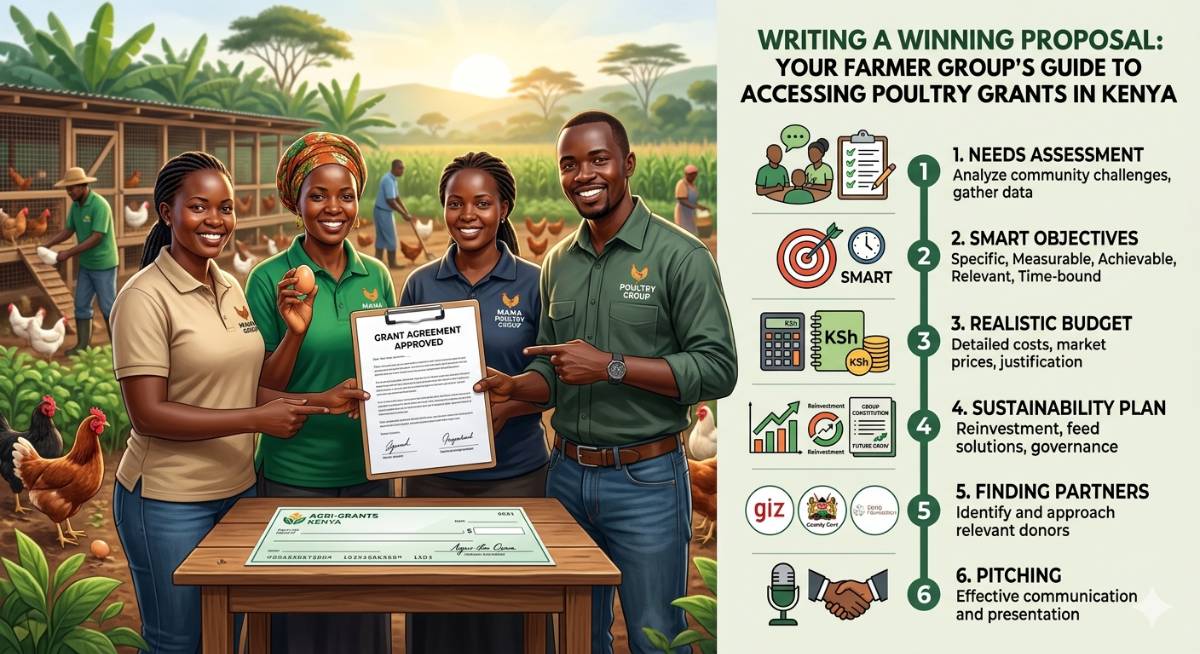
Micro-Grants and NGO Programs: Several organizations in Kenya support smallholder farmers. Look into programs offered by the Kenya National Chamber of Commerce and Industry (KNCCI) which sometimes have initiatives for small businesses. Numerous local and international NGOs also provide grants, training, and resources to empower rural communities in agriculture. Research specific NGOs focusing on sustainable development, youth, or women in agriculture in your region.
For more information on potential support, consider exploring resources like "Government Grants for Farmers" and local agricultural development agency websites.
Scaling Your Zero-Capital Enterprise
Starting with recycled materials doesn't mean staying small. Once your initial flock is established, and your system proves effective, you can scale up strategically:
Reinvest Profits: As your birds lay eggs or grow for meat, sell a portion of the produce to generate cash. Reinvest this income into purchasing more feed, improved breeding stock, or higher-quality materials for expansion.
Community Networks: Build strong relationships with other local farmers. This can lead to shared resources, collective bargaining for feed, and even market access.
Diversification: Once stable, consider diversifying into other poultry types or even small-scale vegetable farming to create multiple income streams.
Conclusion
Zero capital poultry farming in Kenya using recycled materials is a testament to the power of innovation and resilience. By thoughtfully sourcing materials, designing efficient coops, creatively improvising equipment, and leveraging non-traditional funding avenues like bartering and micro-grants, anyone can embark on a successful poultry farming journey. The story of Gladys from Kiambu is a powerful reminder that with determination and smart resource management, a thriving poultry business can indeed be built from the ground up, with minimal initial financial outlay.
Embrace these strategies, and watch your poultry dream take flight.
For further reading on sustainable housing, check out resources on "Building Low-Cost Housing" and local agricultural extension offices.
Poultry Market Kenya is a dedicated poultry farming and agribusiness blog focused on empowering farmers, traders, and agri-entrepreneurs across Kenya. We publish practical, data-driven content covering poultry production, disease management, feeding strategies, housing, equipment reviews, and market insights.
Our goal is to bridge the gap between traditional poultry farming practices and modern, profitable methods by providing reliable information, expert guidance, and real-world case studies.