Overview: Launching Your Poultry Venture with Zero Capital
Starting a poultry farm in Kenya often seems daunting due to perceived high initial investment costs. However, the dream of a profitable poultry business doesn't have to be stifled by a lack of capital. This guide provides a comprehensive roadmap for zero capital poultry farming Kenya recycled materials, demonstrating how resourceful farmers can establish thriving operations with minimal financial outlay. By leveraging readily available recycled materials and adopting innovative strategies, you can build a sustainable poultry farm, significantly reducing the traditional setup cost which can easily exceed KSh 50,000 for a conventional coop, down to as little as KSh 500-2,000. This approach not only makes poultry farming accessible but also promotes environmental sustainability, offering a distinctive path for aspiring poultry farmers, feed makers, and students alike.
Sourcing Materials: Your Free Resource Network
The foundation of a zero-capital poultry farm lies in effective material sourcing. The key is to think creatively and look at what others discard as valuable resources.
Salvage Yards and Demolition Sites: These locations are goldmines for sturdy timber, metal sheets, corrugated iron, and even old doors or windows that can be repurposed for coop construction. Always seek permission before collecting materials. Focus on structural integrity and safety.
Farmers' Waste: Many agricultural businesses discard broken crates, pallets, old fencing, and even feed bags that can be cleaned and reused.
Local farmers are often happy for someone to clear their waste, fostering community spirit.
Household and Industrial Waste:
Plastic Bottles: Excellent for DIY feeders, waterers, or even woven into wall panels for insulation and ventilation. They are abundant and durable.
Old Tires: Can be stacked and filled with earth for raised garden beds that can grow fodder, or cut and adapted for robust nesting boxes. Ensure they are thoroughly cleaned.
Cardboard Boxes: When laminated or treated (e.g., with natural glues or paints for water resistance), these can offer temporary shelter or partitioning within a larger coop. Not for structural use.
Fabric Scraps/Old Tarpaulins: Ideal for creating curtains for insulation, shade, or windbreaks, offering crucial protection from elements.
The secret is to be proactive and build relationships within your community, letting people know what you're looking for. This network can be invaluable for consistent material supply for zero capital poultry farming Kenya recycled materials.
Designing a functional and safe coop using recycled materials requires ingenuity. Here are a few adaptable designs suitable for establishing your poultry farm with minimal costs:
1. The Pallet & Tarpaulin Coop
This design utilizes discarded wooden pallets as the primary structural framework. Pallets are strong, often uniformly sized, and readily available.
Construction: Stack and secure pallets to form the walls. For roofing, use old corrugated iron sheets from demolition sites or sturdy tarpaulins stretched over a simple frame of salvaged timber. Reinforce joints for stability.
Flooring: Compacted earth or a layer of sand is often sufficient, though a raised floor made from more pallets or sturdy planks can offer better predator protection and ventilation.
Ventilation & Light: Gaps in pallets can provide natural ventilation; cover with old mosquito nets or fine mesh to prevent pests and predators. Windows can be cut into the structure and covered with clear plastic sheets or fine mesh for light.
2. The Bottle-Wall Coop
For a more permanent and insulated structure, plastic bottles can be transformed into robust, thermally efficient walls.
Construction: Collect thousands of plastic bottles, fill them with sand or soil for stability, and then lay them like bricks, binding them with mud mortar or natural clay. A salvaged timber or metal frame provides essential structural support.
Roofing: As with the pallet coop, old iron sheets, tarpaulins, or even woven plastic waste can be utilized for roofing, ensuring waterproofing.
Advantages: Offers excellent insulation against extreme temperatures, is extremely durable, and effectively utilizes a vast amount of waste, contributing to environmental clean-up.
3. Tyre & Mudbrick Coop
Old car tyres offer incredible versatility, strength, and insulation properties, making them ideal for the base of a resilient coop.
Construction: Stack tyres in a circular or rectangular pattern, filling them with compacted earth. This creates an incredibly strong and insulated foundation. Mud bricks (adobe style) can then be made from local soil and straw to build the upper walls, which naturally regulate internal temperatures.
Roofing: A simple pitched roof using salvaged materials like timber and corrugated sheets provides shelter. Ensure proper drainage to protect the mudbrick walls.
Advantages: Very sturdy, provides excellent temperature regulation, and makes use of readily available and difficult-to-dispose-of waste materials.
Remember, the goal is to provide shelter, protection from predators, adequate ventilation without drafts, and easy cleaning. For inspiration, many resources detail various DIY coop builds. For more detailed insights into construction with minimal resources, consider reviewing general principles of low-cost building at https://www.affordablehomedesigns.org/building-low-cost-housing.
Equipment Hacks: Ingenuity in Action
Essential poultry equipment can also be fashioned from recycled items, saving significant costs.
Feeders: Large plastic containers (e.g., old paint buckets, jerry cans) can be modified by cutting openings or creating gravity-feed systems. Old car tires can be cut in half and cleaned thoroughly to serve as robust, heavy feeders, reducing spillage.
Waterers: Plastic bottles inverted into a base (like a cut-down jerry can or a wide basin) create simple, effective nipple or trough waterers. Ensuring constant access to clean water is paramount; these must be kept meticulously clean to prevent disease outbreaks.
Nesting Boxes: Old plastic crates, wooden boxes, or even sections of old tyres can be lined with straw or dry grass to create comfortable, private nesting areas for layers. Ensure they are accessible for egg collection and easily cleaned.
Funding Sources & Bartering Strategies
While the physical infrastructure can be zero-cost, operational expenses like feed, initial chicks, and veterinary care require resources. This is where smart financial and communal strategies come into play.
Bartering: The Original Economy
Gladys from Kiambu, a remarkable farmer, exemplifies the power of bartering. Starting with a few donated chicks and a recycled coop, she initially exchanged fresh eggs for supplementary feed from her neighbors. Later, she bartered her labor for minor repairs on her coop or for help with transporting heavier materials. This bartering strategy can extend to exchanging excess produce (vegetables, other farm goods) for poultry supplies, or even trading eggs for local veterinary advice. It builds strong community ties and minimizes cash outflow.
Micro-Grants and NGO Support
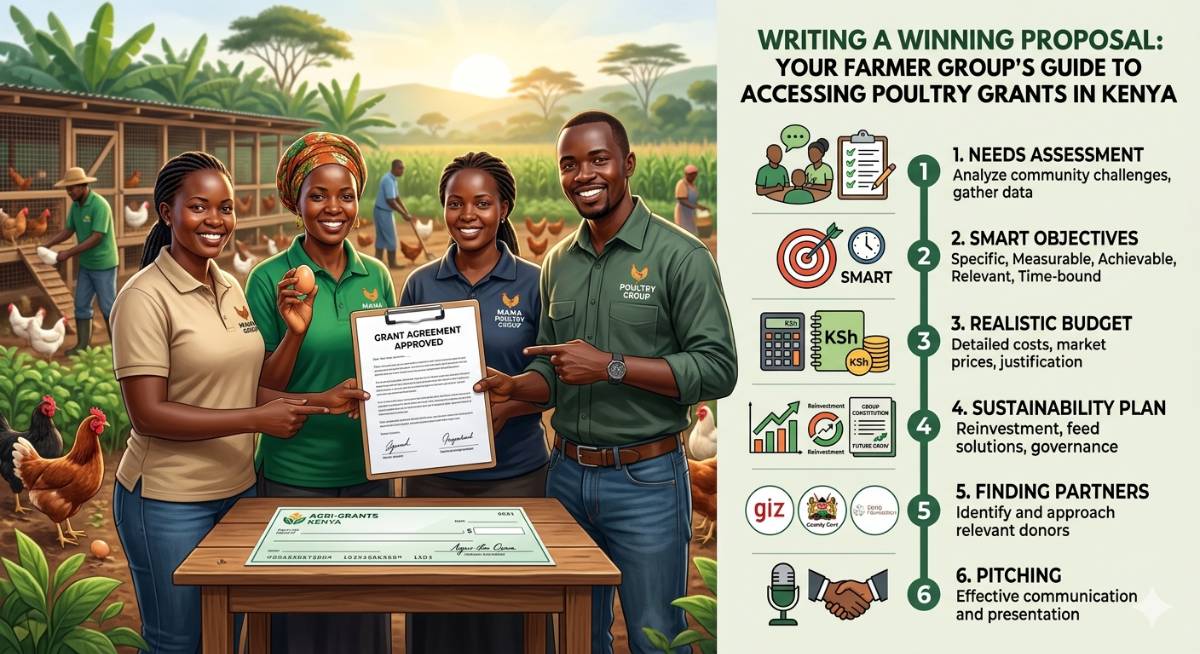
Several organizations in Kenya support smallholder farmers. While direct cash grants for individuals can be competitive, many NGOs and local community development programs offer training, inputs, or support in kind. The Kenya National Chamber of Commerce and Industry (KNCCI) often has programs or can direct entrepreneurs to relevant opportunities. Research local and international NGOs focusing on agricultural development, food security, or youth empowerment.
These often provide seeds, livestock, or grants specifically for small-scale projects. Information on general "Government Grants for Farmers" can also provide leads, as some schemes might support low-income or start-up agriculturalists: https://www.agriculturegrants.gov/farmers-grants-kenya.
Scaling Strategy: Growing Your Zero-Capital Farm
Once your initial flock is established and productive, scaling becomes the next logical step in your zero capital poultry farming Kenya recycled materials journey.
Reinvest Profits: Use early profits from egg or meat sales to purchase more chicks, improve your recycled infrastructure (e.g., adding more secure fencing), or buy higher-quality feed for faster growth and better yield.
Breed Your Own: If you start with a breeding pair, hatching your own chicks can significantly reduce future stock costs and increase your independence.
Community Hub: Become a trusted local hub for poultry products, establishing a reputation for quality and reliability. Word-of-mouth is a powerful marketing tool.
Diversify: Consider adding other small livestock or crops to enhance income streams and create more bartering opportunities, building a more resilient and sustainable farm.
Conclusion
Zero capital poultry farming Kenya recycled materials is not just a concept; it's a proven pathway to economic empowerment and sustainable living. By embracing resourcefulness, fostering community spirit, and applying innovative design, aspiring poultry farmers can overcome financial barriers and build successful, resilient poultry ventures. This hands-on, low-cost approach provides not only a livelihood but also contributes significantly to food security and environmental responsibility within Kenya. Start small, think big, and let your ingenuity lead the way towards a thriving poultry business.
Poultry Market Kenya is a dedicated poultry farming and agribusiness blog focused on empowering farmers, traders, and agri-entrepreneurs across Kenya. We publish practical, data-driven content covering poultry production, disease management, feeding strategies, housing, equipment reviews, and market insights.
Our goal is to bridge the gap between traditional poultry farming practices and modern, profitable methods by providing reliable information, expert guidance, and real-world case studies.