From Waste to Wealth: Sustainable Manure Recycling for a Circular Economy in Kenyan Poultry Farming
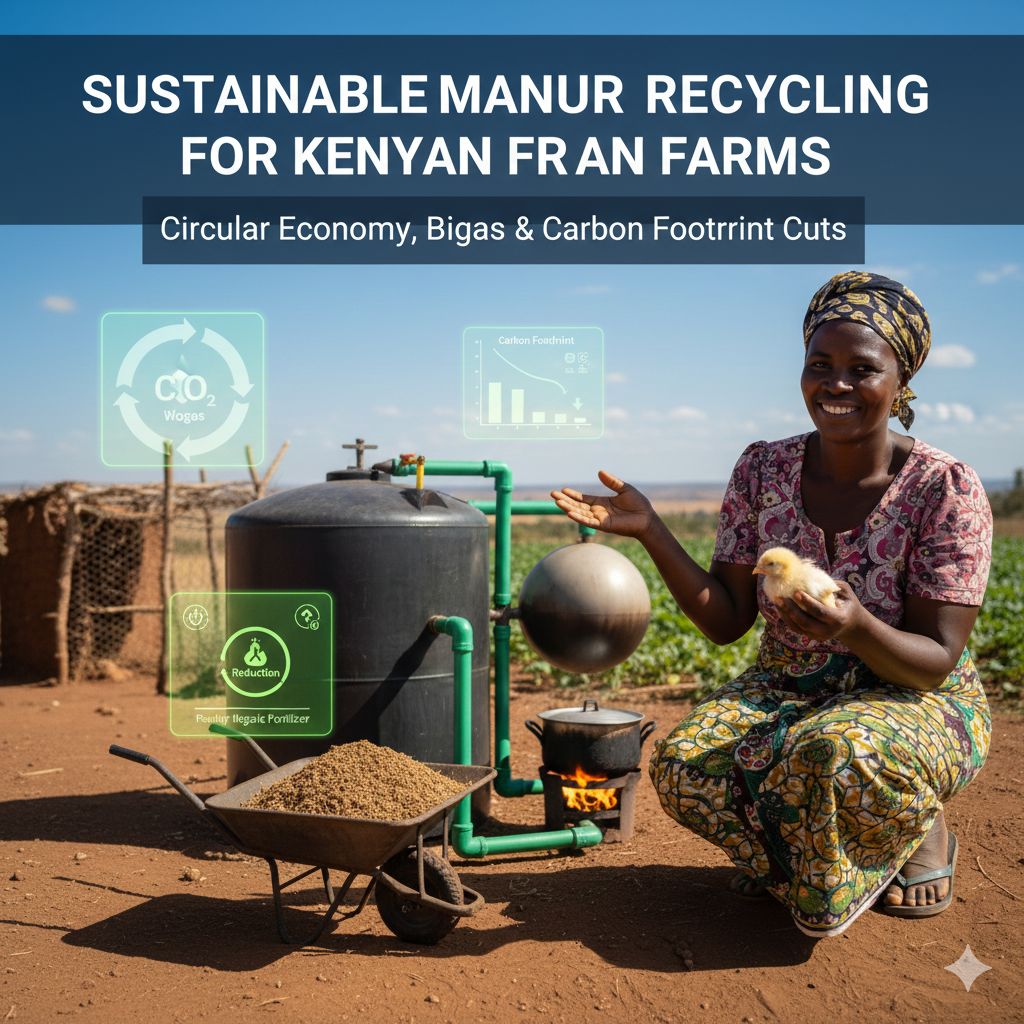
In the dynamic and growing poultry sector in Kenya, effective waste management is no longer just an environmental obligation but a golden opportunity for economic growth and sustainability. As poultry farms expand to meet increasing demand, the sheer volume of manure produced presents both a challenge and a valuable resource. Embracing sustainable manure recycling and circular economy strategies offers Kenyan producers a pathway to not only mitigate environmental impact but also generate new revenue streams, reduce operational costs, and build a more resilient farming system. This article delves into practical approaches, highlighting the immense potential of biogas from poultry waste, renewable energy adoption, and significant carbon footprint cuts for a brighter, greener future.
The Imperative for Sustainable Poultry Waste Management
Traditional methods of manure disposal often lead to environmental issues such as soil and water pollution, greenhouse gas emissions, and unpleasant odors. However, when viewed through a circular economy lens, poultry manure transforms from a burdensome waste product into a valuable feedstock. A circular economy aims to keep resources in use for as long as possible, extract the maximum value from them whilst in use, then recover and regenerate products and materials at the end of each service life.
For Kenyan poultry farmers, this means rethinking how manure is handled and leveraging its inherent energy and nutrient content.
Challenges and Opportunities in Kenya
Kenyan poultry farmers, from small-scale to commercial operations, face unique challenges including fluctuating energy costs, limited access to affordable fertilizers, and pressure to adopt environmentally friendly practices. Sustainable manure recycling addresses these head-on by:
Reducing chemical fertilizer dependency: Processed manure provides nutrient-rich organic fertilizer.
Generating renewable energy: Biogas systems offer an alternative to expensive grid electricity or fossil fuels.
Improving farm hygiene: Proper waste management leads to healthier birds and reduced disease transmission.
Creating economic value: Sale of biogas, bio-slurry, and carbon credits.
Biogas from Poultry Waste: A Game-Changer for Kenyan Producers
One of the most impactful circular economy strategies for poultry farmers is the anaerobic digestion of manure to produce biogas. This proven technology involves breaking down organic matter in an oxygen-free environment, yielding a methane-rich gas (biogas) and a nutrient-dense digestate (bio-slurry).
How Biogas Systems Work
A typical biogas plant for poultry waste involves:
Collection: Manure is collected from poultry houses.
Mixing: It's often mixed with water or other organic wastes to achieve optimal consistency.
Digestion: The mixture is fed into an anaerobic digester, a sealed tank where microbes break down the organic material.
Gas Collection: Biogas is collected and stored, ready for use.
Digestate Output: The remaining bio-slurry is removed and can be used as a superior organic fertilizer.
Benefits for Kenyan Farms
On-Farm Energy Generation: Biogas can be used for cooking, heating poultry houses (reducing reliance on charcoal or electricity), powering generators for electricity, and even fueling farm vehicles. This renewable energy adoption significantly lowers operational costs.
High-Quality Organic Fertilizer: The bio-slurry is an excellent, pathogen-reduced organic fertilizer, rich in nitrogen, phosphorus, and potassium. It improves soil structure, water retention, and crop yields, reducing the need for synthetic fertilizers and their associated environmental impact.
Odor and Pathogen Reduction: Anaerobic digestion significantly reduces the foul odors associated with raw manure and destroys many common pathogens and weed seeds, leading to a healthier farm environment.
Pest Control: Reduced odors and proper processing can deter flies and other pests.
Embracing Renewable Energy Adoption and Carbon Footprint Cuts
The shift to biogas and other sustainable practices positions Kenyan poultry producers as leaders in environmental stewardship. Renewable energy adoption through biogas offers a direct pathway to significantly reduce a farm's carbon footprint.
Quantifying Carbon Footprint Cuts
When poultry manure decomposes aerobically (with oxygen) in traditional open piles, it releases methane (CH4) and nitrous oxide (N2O) – potent greenhouse gases far more impactful than carbon dioxide. By capturing methane in a biogas digester, these emissions are prevented from entering the atmosphere. Furthermore, replacing fossil fuels with biogas for energy needs further contributes to carbon footprint cuts.
Market Advantages and Incentives
Adopting these strategies can also open doors to new market opportunities. Consumers and international buyers are increasingly conscious of the environmental impact of their food sources. Farms demonstrating a commitment to sustainability, carbon footprint cuts, and renewable energy adoption can gain a competitive edge. There may also be opportunities to participate in carbon credit schemes, providing additional income for farmers.
The Kenyan government and various NGOs are also promoting circular economy strategies and may offer grants, subsidies, or technical support for the adoption of such technologies.
Practical Steps for Kenyan Poultry Farmers
Implementing sustainable manure recycling doesn't have to be daunting. Here are practical steps and considerations:
Assess Your Scale: Small-scale farmers can opt for simple, affordable domestic biodigesters. Larger commercial operations might require more complex, industrial-scale plants.
Conduct a Feasibility Study: Understand the quantity of manure produced, energy needs, and potential space for a digester. Local agricultural extension officers or energy specialists can assist.
Source Local Expertise: Several Kenyan companies and organizations specialize in biogas technology installation and maintenance. Partnering with them ensures appropriate technology and ongoing support.
Training and Education: Ensure farmhands are trained in the proper operation and maintenance of the biogas system and the safe handling of bio-slurry.
Explore Financing Options: Look into government incentives, microfinance institutions, or agricultural loans specifically geared towards renewable energy adoption and sustainable farming practices.
Conclusion: Paving the Way for Sustainable Poultry
Sustainable manure recycling is more than just good environmental practice; it's a smart business strategy that aligns with the principles of a circular economy. For Kenyan poultry producers, adopting biogas from poultry waste and other innovative waste-to-value solutions offers a powerful means to achieve renewable energy adoption, realize significant carbon footprint cuts, and enhance overall farm profitability and resilience. By embracing these forward-thinking approaches, Kenyan farms can transform challenges into opportunities, leading the way towards a truly sustainable and prosperous poultry sector in East Africa.
The future of poultry farming in Kenya is green, efficient, and circular. It’s time to turn waste into wealth and build a legacy of sustainable agriculture for generations to come.
Poultry Market Kenya is a dedicated poultry farming and agribusiness blog focused on empowering farmers, traders, and agri-entrepreneurs across Kenya. We publish practical, data-driven content covering poultry production, disease management, feeding strategies, housing, equipment reviews, and market insights.
Our goal is to bridge the gap between traditional poultry farming practices and modern, profitable methods by providing reliable information, expert guidance, and real-world case studies.