In the dynamic world of poultry farming, the initial weeks of a chick's life are undeniably critical. Proper brooding is the cornerstone of a healthy flock, directly impacting growth, productivity, and ultimately, a farmer's profitability. For countless smallholder poultry farmers across rural Kenya, however, achieving optimal brooding conditions presents a significant challenge. Traditional brooding methods, often relying on charcoal, kerosene lamps, or even rudimentary fire, are not only costly and labor-intensive but also prone to inconsistent temperatures, fire hazards, and high chick mortality rates. This often leads to substantial losses, undermining the potential for sustainable poultry enterprises.
The Urgent Need for Sustainable Brooding Solutions
The challenges faced by Kenyan smallholder farmers in chick rearing are multifaceted:
High Mortality Rates: Many farmers report that nearly half of their young chicks do not survive beyond eight weeks, primarily due to poor temperature regulation, inadequate housing, and susceptibility to diseases. Without a stable, warm environment, chicks are vulnerable to cold stress, which weakens their immune systems and increases the risk of illness.
Exorbitant Costs: Fuel for traditional brooders, such as charcoal and kerosene, represents a significant ongoing expense.
These costs can eat into profit margins, making it difficult for farmers to scale their operations or even break even.
Labor-Intensive Management: Manual monitoring and frequent refueling of traditional heat sources demand constant attention, often requiring farmers to stay awake through the night to ensure consistent temperatures. This not only adds to the workload but also introduces human error, further jeopardizing chick survival.
Environmental Concerns: The reliance on charcoal and firewood contributes to deforestation and indoor air pollution, posing health risks to both humans and poultry.
Recognizing these critical pain points, innovative solutions that are affordable, efficient, and environmentally friendly have become imperative. This is where solar-powered brooding systems emerge as a game-changer.
Solar-Powered Brooders: A Bright Future for Poultry Farming
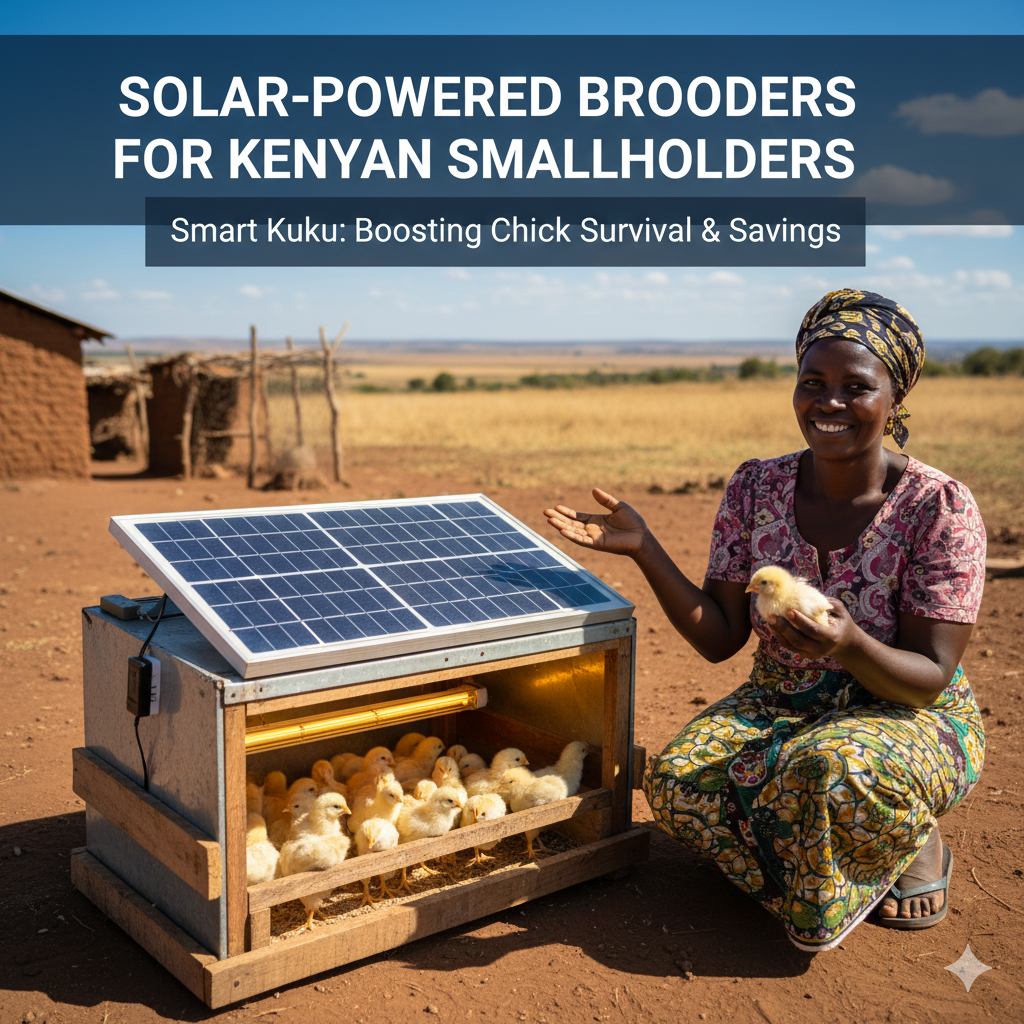
Solar brooding systems leverage the abundant sunshine in Kenya to provide a consistent, reliable, and cost-effective heat source for young chicks. These systems typically consist of solar panels that charge a battery, which then powers a heating element within the brooder. Advanced versions often include thermostats and sensors to maintain precise temperature control, mimicking the natural warmth of a mother hen.
The Smart Kuku Brooder: A Kenyan Innovation
Among the various solar brooding innovations, the Smart Kuku Brooder System stands out as a locally developed solution specifically designed to address the needs of Kenyan smallholder farmers. Developed by Arinifu Technologies, the Smart Kuku Brooder is often referred to as a “digital mother hen” due to its intelligent features.
Key aspects of the Smart Kuku Brooder include:
Solar and Electric Hybrid: It can operate on both solar power and grid electricity, ensuring uninterrupted heating even during cloudy days or at night. The solar component significantly reduces electricity reliance and costs.
Automated Temperature Regulation: Equipped with sensors and a thermostat, the Smart Kuku Brooder automatically adjusts the heat, maintaining the ideal temperature for chicks.
This eliminates the need for constant manual monitoring, freeing up farmers' time and ensuring optimal conditions.
Reduced Chick Mortality: The consistent and precise temperature control offered by the Smart Kuku Brooder is its most significant advantage. Reports indicate that the mortality rate with this system can be as low as 1-3% during the crucial brooding period, a drastic improvement over traditional methods.
Impact on Chick Survival in Rural Kenya
The adoption of solar-powered brooding systems like the Smart Kuku Brooder has a transformative impact on chick survival rates in rural Kenya. By providing a stable and optimal thermal environment, these brooders:
Minimize Cold Stress: Chicks are highly susceptible to cold during their first few weeks. Consistent warmth prevents chilling, which can lead to stunted growth, increased feed consumption (as chicks use energy to generate heat), and higher susceptibility to diseases.
Enhance Immunity: Chicks kept in ideal conditions develop stronger immune systems, making them more resilient to common poultry diseases.
Promote Healthy Growth: Optimal temperatures allow chicks to allocate their energy towards growth and development rather than fighting cold, leading to faster growth rates and better feed conversion ratios.
Farmers who have transitioned to solar brooding report a noticeable improvement in the health and vigor of their young flocks, directly translating to more birds reaching maturity and entering the market.
Cost Savings Versus Traditional Methods
The economic benefits of solar-powered brooders for Kenyan smallholders are substantial, offering significant cost savings compared to traditional brooding methods:
Feature/Method
Traditional Brooding (Charcoal/Kerosene)
Solar-Powered Brooding (e.g., Smart Kuku)
Fuel Cost
High, ongoing
expenses for charcoal/kerosene | Minimal to zero after initial investment |
| Labor Input | High (constant monitoring, refueling) | Low (automated, less manual intervention) |
| Mortality Rate | Often high (up to 50% or more) | Significantly reduced (1-3% reported) |
| Fire Risk | High | Very low |
| Environmental Impact | High (deforestation, air pollution) | Low (clean, renewable energy) |
| Consistency of Heat | Inconsistent, fluctuates with fuel levels | Consistent, precisely regulated |
| Long-Term Savings | None, continuous expenses | Substantial, payback period often within 1-2 years |
Farmers using traditional methods often spend a considerable portion of their potential profits on fuel alone. With solar brooders, once the initial investment is made, the operational costs for heating are drastically reduced, if not eliminated entirely. This translates into higher profit margins and a quicker return on investment.
Furthermore, the reduction in chick mortality directly contributes to increased revenue. More healthy chicks reaching market weight means more sales and a more robust poultry business. The reduced labor also allows farmers to focus on other essential aspects of farm management, further enhancing efficiency and productivity.
Conclusion: Empowering Smallholders for a Sustainable Future
Solar-powered brooders, exemplified by innovations like the Smart Kuku system, represent a pivotal shift in poultry farming practices for Kenyan smallholders. They offer a sustainable, economically viable, and highly effective alternative to traditional methods, addressing critical issues of chick survival and operational costs. By embracing these innovative technologies, poultry farmers, feed makers, poultry companies, veterinarians, and students alike can contribute to a more resilient, profitable, and environmentally conscious poultry industry in Kenya and beyond.
Investing in solar brooding is not just an upgrade in equipment; it's an investment in the future of sustainable agriculture, ensuring healthier flocks, empowered farmers, and a brighter economic outlook for rural communities.
Poultry Market Kenya is a dedicated poultry farming and agribusiness blog focused on empowering farmers, traders, and agri-entrepreneurs across Kenya. We publish practical, data-driven content covering poultry production, disease management, feeding strategies, housing, equipment reviews, and market insights.
Our goal is to bridge the gap between traditional poultry farming practices and modern, profitable methods by providing reliable information, expert guidance, and real-world case studies.