Imagine walking into your chicken house one morning and finding a bird with its neck twisted to one side, unable to stand properly, while another trembles uncontrollably in the corner. For many poultry farmers, this is the first time they hear the words "Newcastle disease" — and by then, the virus may already be moving through the entire flock.
Newcastle disease (ND) is one of the most devastating viral diseases affecting chickens worldwide. It spreads fast, kills fast, and in its nervous form, it leaves birds with twisted necks, paralysed legs, and tremors that are impossible to ignore. The good news? If you know what to look for and how to protect your birds beforehand, you can dramatically reduce your losses.
What Makes Newcastle Disease So Dangerous
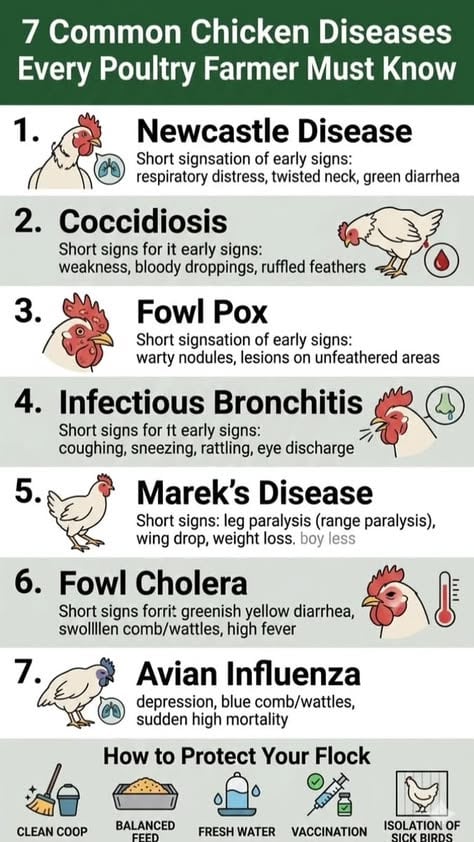
Newcastle disease is caused by avian paramyxovirus type 1. Not all strains behave the same way. Some cause mild respiratory problems, while the most aggressive — the velogenic strains — can wipe out 30 to 50% of an unvaccinated flock, sometimes more.
There are two forms of the severe disease worth knowing:
- Viscerotropic velogenic ND attacks the gut and internal organs, causing greenish diarrhoea, depression, and sudden deaths.
- Neurotropic velogenic ND (NVND) is the form that produces the dramatic nervous signs, usually alongside some respiratory involvement.
It is this second form that confuses farmers most, because a bird with a twisted neck doesn't immediately look like it has a "disease" — it looks injured or deformed.
Recognizing the Nervous Signs
With neurotropic velogenic Newcastle disease, neurological signs often appear before or alongside respiratory symptoms. Watch for:
- Tremors and seizures — uncontrolled shaking of the head, neck, or whole body
- Torticollis — the classic twisted neck, where the bird's head turns sideways or upward and stays fixed
- Paralysis of wings and legs — one or both wings droop, legs stop responding
- Circling and clonic spasms — birds walk in circles or paddle their legs rhythmically
- Complete paralysis in advanced cases
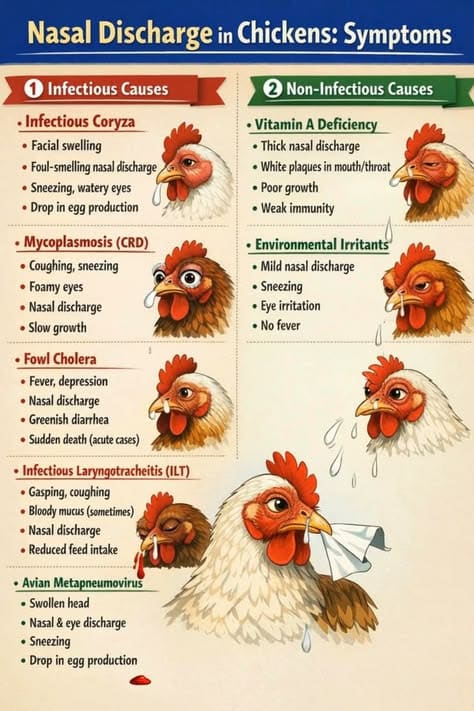
Respiratory signs that may accompany these include sneezing, coughing, gasping, and nasal discharge. In laying birds, expect a sharp drop in egg production, sometimes stopping altogether. Greenish, watery diarrhoea and swelling around the head and neck are also common in severe outbreaks.
A quick rule of thumb
If several birds in your flock suddenly show twisted necks, trembling, or paralysis at the same time, think infectious disease — not injury. A single bird with an odd posture might have been hurt. Five birds with twisted necks is an outbreak.
Don't Confuse It With These Conditions
Several other problems cause nervous signs in chickens, and telling them apart matters because the response is different for each.
| Typical sign | Age affected | Likely condition | Cause |
|---|---|---|---|
| One leg forward, one leg back | All ages | Marek's disease | Virus |
| Toes curled under the foot | Chicks | Curled-toe paralysis | Nutritional (riboflavin deficiency) |
| Progressive limp paralysis | All ages | Botulism | Toxin from spoiled feed or carcasses |
| Trembling of head and neck | Chicks | Epidemic tremor | Virus |
| Twisted neck, tremors, paralysis with respiratory signs | All ages | Newcastle disease | Virus |
Marek's disease is the most common look-alike. Its signature is the "splits" posture — one leg stretched forward, one back — caused by nerve damage, and it usually develops more slowly than Newcastle. Curled-toe paralysis in chicks points to a feed problem, specifically a lack of vitamin B2. Botulism causes a progressive, floppy paralysis and often follows birds eating decaying matter or maggots from spoiled feed.
Have you ever seen a twisted neck in your flock and assumed it was Marek's? That mistake is common — and costly, because Newcastle spreads far faster and demands immediate action.
What To Do If You Suspect Newcastle Disease
Here is the hard truth: there is no treatment for Newcastle disease. No antibiotic or home remedy will cure a viral infection of this kind. What you do in the first 48 hours determines how much of your flock survives.
- Isolate sick birds immediately. Remove any bird showing nervous or respiratory signs from the main flock.
- Stop all movement on and off your farm. No visitors, no new birds, no shared equipment. The virus travels on clothing, shoes, crates, egg trays, and vehicles.
- Contact a veterinarian or animal health officer. Newcastle disease is a notifiable disease in many countries, including Kenya. A proper diagnosis matters, and authorities may need to be informed.
- Support the survivors. Keep sick birds warm, well fed, and hydrated. Watch closely for secondary bacterial infections, especially air sac disease and chronic respiratory disease, which often kill birds weakened by the virus.
- Disinfect thoroughly. Clean and disinfect housing, feeders, and drinkers once the outbreak is contained.
Birds that survive are immune to reinfection, but be aware: they can continue shedding the virus for some time, which means they remain a risk to unvaccinated or naive birds.
Prevention Is Your Only Real Defence
Because there is no cure, everything hinges on keeping the virus out. The farms that survive Newcastle outbreaks are almost always the ones that were prepared before it arrived.
Vaccination
Vaccination is the single most effective tool available. Depending on your level of risk, your vaccination programme should be designed with a veterinarian or animal health provider — the schedule and vaccine type depend on your birds' age, purpose (layers, broilers, breeders, or game birds), and the disease pressure in your area. Skipping or delaying vaccinations to save a small cost is one of the most expensive mistakes a poultry farmer can make.
Biosecurity basics
- Never introduce birds of unknown health status into your flock. This includes chickens, ducks, and other poultry from markets, neighbours, or unverified sources.
- Quarantine new birds for at least two to three weeks before mixing them with your flock.
- Control visitors and equipment. Limit who enters your poultry house, and don't share crates or tools with other farms without disinfecting them.
- Keep wild birds away from feed and water sources, as they can carry the virus.
- Buy day-old chicks from reputable hatcheries with known health programmes.
For small-scale and urban farmers around Nairobi and other Kenyan towns, the biggest risk is often the live bird market. Birds from different sources are mixed together, stressed, and exposed — a perfect environment for Newcastle to spread. If you must buy from a market, quarantine is not optional.
The Bottom Line
Newcastle disease moves faster than most farmers react. By the time you see twisted necks and paralysed wings, the virus has likely already spread through your flock. Your defence is built months earlier: a solid vaccination programme, strict biosecurity, and the discipline to never bring in birds of unknown health status.
Learn the nervous signs — tremors, torticollis, circling, and paralysis — and learn to tell them apart from Marek's, botulism, and nutritional problems. Early recognition won't cure the disease, but it can save the birds that haven't been infected yet.
Have you dealt with a Newcastle outbreak on your farm, or are you unsure whether your vaccination schedule is adequate? Share your experience or question in the comments — other farmers learn from real situations like yours. Follow Poultry Market for more practical poultry health guides, and if you know a farmer who keeps unvaccinated birds, pass this article along. It might save their flock.