Imagine collecting eggs one morning and noticing your best layer has a pale comb, loose droppings, and a slowly shrinking body condition — yet she still eats. That's the quiet signature of an internal worm burden, and by the time these signs appear, the infestation is usually well established. Many small-scale keepers want to avoid routine chemical dewormers, whether for personal preference, organic principles, or concern about residues in eggs. The good news is that several natural options exist. The honest news is that they vary widely in how well they're supported by evidence, and understanding that difference is what separates a healthy flock from a slowly declining one.
Why Worms Are a Bigger Problem Than They Look
Chickens can carry intestinal worms for months without obvious symptoms. During that time, the parasites compete with your birds for nutrients, damage the gut lining, and reduce feed efficiency — meaning you pay for feed that worms effectively consume. Signs of a heavy burden include weight loss, pale combs, diarrhea, and reduced egg production.
Backyard flocks that free-range or contact wild birds, damp soil, and insects face the highest exposure. If your birds forage, assume some level of worm pressure exists and manage for it rather than waiting for visible illness.
A Quick Word on What "Natural" Can and Cannot Do
Before exploring options, it's worth being clear-eyed about one point: natural dewormers generally work best as preventives and load reducers, not as cures for established heavy infestations. If a bird is already visibly sick, conventional treatment under veterinary guidance is usually the responsible choice. Among commercially available options, piperazine (sold as Wazine) is one of the few FDA-approved dewormers for chickens, and it only targets large roundworms — a reminder that even approved drugs have limits.
Natural approaches shine in a different role: keeping worm populations low enough that birds never reach crisis point.
Diatomaceous Earth: Useful, But Not a Magic Powder
Diatomaceous earth (DE) is probably the most debated natural dewormer in poultry keeping. The theory is that its microscopic abrasive particles dehydrate internal parasites the same way they damage insects in stored grain.
The reality is more modest. Once DE becomes wet inside the digestive tract, its mechanical action is greatly reduced, so it should not be relied on as a standalone dewormer. That said, feeding food-grade DE isn't without merit:
- It contains trace minerals that contribute to overall health, and healthier birds resist parasites better.
- It is a source of dietary silicon and calcium; interestingly, internal parasites are discouraged by diets high in calcium.
- It may help as part of a broader prevention program rather than a treatment.
If you choose to feed DE, use only food-grade product, mix a small amount into feed, and avoid creating dust that birds (or you) inhale. Think of it as a supporting player, not the star.
Garlic: The Best-Supported Herbal Option
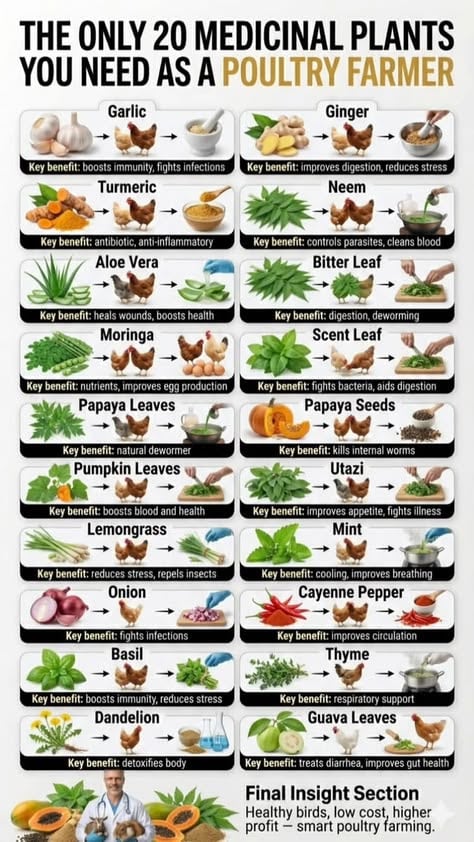
Among herbal approaches, garlic has the longest track record in poultry management. Crushed fresh garlic or garlic added to drinking water is traditionally used to support immune function and create a gut environment less hospitable to parasites. Garlic contains sulfur compounds with documented antimicrobial activity, which is why it appears in so many traditional poultry remedies.
A practical approach many keepers use:
- Crush 1–2 fresh cloves per liter of drinking water, refreshed daily.
- Offer it for several days each month as part of a prevention routine.
- Observe your birds — most drink it readily, but if water intake drops, dilute further.
Garlic won't eliminate a heavy worm burden, but as a routine supportive measure it's inexpensive, safe, and easy to manage even in a small urban setup.
Pumpkin Seeds and Other Traditional Remedies
Pumpkin seeds contain cucurbitacin, a compound believed to paralyze certain intestinal worms, making them easier for the bird to expel. Feeding raw, roughly chopped pumpkin seeds as an occasional treat is harmless and may offer mild benefit — just don't count on it as your only defense.
Other herbs with traditional use in poultry include wormwood, oregano, thyme, tansy, tarragon, and sage. Several of these contain thujone and other active compounds, and their essential oils are considerably more potent than the fresh herbs. A word of caution: thujone-containing herbs can be toxic in concentrated doses, so moderation matters. Commercial natural dewormer blends (often combining garlic, wormwood, pumpkin seed, oregano, and similar ingredients) take the guesswork out of dosing, though their effectiveness still varies between flocks.
Prevention: Where Natural Management Really Wins
The most effective chemical-free worm control program isn't a product at all — it's management. Worm eggs thrive in damp, soiled ground and accumulate where droppings build up. A prevention-first routine looks like this:
- Rotate or rest ranging areas where possible, so worm eggs don't concentrate where birds feed.
- Keep litter dry and replace it regularly; wet litter is a parasite nursery.
- Encourage dust bathing with dry soil or sand areas, which supports overall skin and feather health.
- Limit contact with wild birds around feeders and waterers.
- Avoid overcrowding, which increases both stress and parasite transmission.
- Feed a balanced diet — well-nourished birds tolerate low-level parasite exposure far better than deficient ones.
Have you ever compared droppings before and after a litter change or pasture rotation? Many keepers are surprised how quickly droppings quality improves when the environment is cleaned up.
Knowing When Natural Isn't Enough
Responsible natural management includes knowing its limits. Seek veterinary advice or consider conventional treatment if you observe:
- Visible worms in droppings
- Persistent diarrhea unresponsive to management changes
- Progressive weight loss despite good appetite
- A sudden drop in egg production across multiple birds
A simple fecal test through a veterinarian or diagnostic lab can tell you whether worms are present and which type — far better than guessing. This is especially important because different worms respond to different treatments, and no natural remedy covers all species.
Putting It Together
A sensible chemical-free worm strategy combines three layers: environmental management as the foundation, supportive natural inputs like garlic, food-grade DE, and pumpkin seeds as routine measures, and veterinary-backed treatment reserved for genuine infestations. This layered approach lets you minimize chemical use without gambling with your flock's health.
Worm control is one of those areas where consistency beats intensity. Small, regular actions — fresh garlic water, dry litter, rotated ground — do more over a year than any single intervention.
Have you tried natural dewormers with your flock? Share what's worked (or hasn't) in the comments — your experience could help another keeper make a better decision. If you found this useful, pass it along to a fellow poultry farmer, and follow Poultry Market for more practical, honest flock health guidance.