You walk into the coop on a Monday morning and notice one of your best layers has a wet, crusty nose. She is sneezing. By Wednesday, three more birds are doing the same thing. Now you have a decision to make, and making the wrong one can cost you the whole flock.
Nasal discharge is one of the most common warning signs in poultry, but it is also one of the most misread. Sometimes it is a serious infectious disease moving through your birds. Sometimes it is nothing more than dusty bedding or poor ventilation. Telling the difference early is what separates a small problem from a major loss.
First, Look at the Whole Picture
Before you assume disease, observe the flock as a group. Ask yourself a few practical questions:
- How many birds are affected — one or many?
- Did signs appear suddenly or gradually?
- Is there facial swelling, watery eyes, or a foul smell?
- Has egg production dropped?
- Have you introduced new birds recently?
- Is the coop dusty, damp, or poorly ventilated?
A single bird with a slightly wet nose in a dusty coop is a very different situation from ten birds with swollen faces and a bad odor. The pattern matters more than the symptom alone.
Infectious Causes of Nasal Discharge
When discharge is caused by a pathogen, it usually spreads. These are the main culprits you should know about.
Infectious Coryza
This is often described as the chicken version of the common cold, and it is one of the most common bacterial diseases in backyard flocks. It is caused by Avibacterium paragallinarum (formerly Haemophilus paragallinarum).
Typical signs include:
- Nasal discharge and sneezing
- Facial swelling, especially around the eyes and wattles
- Decreased activity and appetite
- A characteristic foul odor from the discharge
That foul smell is a useful clue. Infectious bronchitis, for example, rarely produces facial swelling or odor, so these details help you narrow things down. Coryza often enters a flock through a newly introduced bird, or one that recently attended a show or market where it mixed with other poultry. This is why quarantining new arrivals for at least two to three weeks is not optional — it is your cheapest disease insurance.
Chronic Respiratory Disease (CRD)
CRD is caused primarily by Mycoplasma gallisepticum. Unlike coryza, it tends to develop slowly, and interestingly, much of the damage comes from the bird's own immune and inflammatory response rather than the organism itself.
Watch for:
- Nasal discharge and watery eyes
- Swelling around the eyes or sinuses
- Reduced appetite, decreased activity, and slow growth
- A noticeable drop in egg production in layers
One important detail: in uncomplicated cases, clinical disease often only develops when other pathogens or stress factors are present. A bird carrying mycoplasma may look fine until cold weather, overcrowding, or another infection tips the balance. In Kenya, where many small-scale coops deal with dust, temperature swings, and mixed-age flocks, these stress factors are common.
Infectious Bronchitis
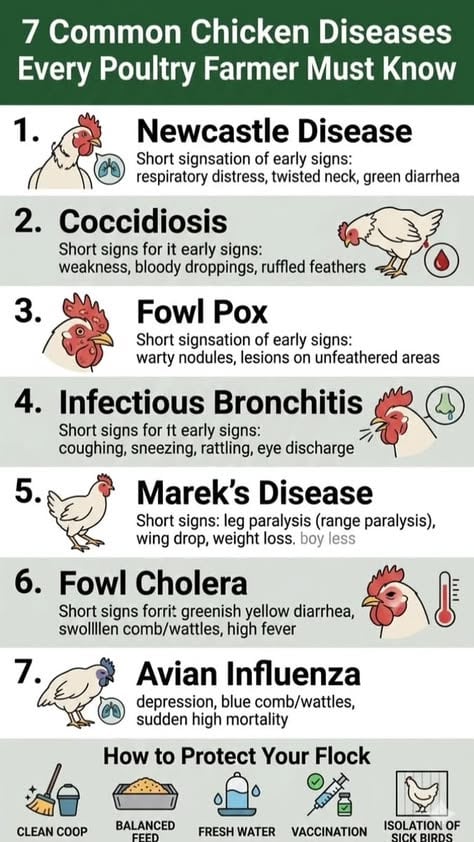
This is a highly contagious viral disease. Birds show sneezing, nasal discharge, and respiratory sounds, and laying hens often produce eggs with poor shell quality and watery whites. That egg quality change is a distinguishing feature — nutritional roup, for comparison, does not affect egg whites or shells. Bronchitis spreads fast through a flock, so onset in many birds within days is a red flag.
Infectious Laryngotracheitis (ILT)
ILT is a viral respiratory disease that can be far more severe. Birds may show nasal discharge along with gasping, coughing, and in serious cases, bloody mucus. If your birds are struggling to breathe and stretching their necks to gasp, treat it as urgent and involve a veterinarian quickly.
Other Possibilities
Low pathogenic avian influenza, lentogenic Newcastle disease, and respiratory infections like brooder pneumonia (a fungal condition) can also produce nasal discharge. Less common conditions include canker and respiratory cryptosporidiosis. Because several of these look similar at first glance, laboratory confirmation is often the only way to be certain.
Non-Infectious Causes
Not every runny nose means disease. Before reaching for medication, check the environment:
- Dust and ammonia. Poor ventilation and wet litter raise ammonia levels, which irritate the respiratory tract and cause discharge and watery eyes. If your eyes sting when you enter the coop, imagine what your birds are breathing all day.
- Nutritional roup. Vitamin A deficiency can cause respiratory signs and discharge that mimic infection.
- Foreign material. A bird that gets feed dust or debris in its nostrils may sneeze and discharge until it clears.
A simple test: improve ventilation, refresh the litter, and watch for a few days. If signs improve without treatment, the environment was likely the problem. If they spread or worsen, think infectious.
A Practical Comparison
| Clue | Points Toward |
|---|---|
| Foul odor + facial swelling | Infectious coryza |
| Slow spread + egg drop + eye swelling | CRD (mycoplasma) |
| Fast spread + poor shells/watery whites | Infectious bronchitis |
| Gasping + bloody mucus | Laryngotracheitis |
| One or two birds, dusty coop, no spread | Environmental irritation |
This table is a starting point, not a diagnosis. Several diseases overlap, and mixed infections are common.
What to Do When You See Discharge
- Isolate affected birds immediately to slow any spread.
- Check the environment — ventilation, ammonia, dust, litter moisture.
- Record what you see: number of birds affected, speed of spread, egg production changes, any deaths.
- Do not medicate blindly. Antibiotics given for a viral disease waste money and can mask signs, making diagnosis harder.
- Contact a veterinarian or animal health officer if signs spread, birds die, or you suspect something serious. Postmortem examination and laboratory testing give answers that guesswork cannot.
Have you ever treated a flock for one disease only to find out it was something else entirely? It happens more often than most farmers admit, and it is exactly why observation comes before medication.
Prevention Beats Treatment
Most respiratory outbreaks trace back to a handful of avoidable mistakes: buying birds of unknown health status, skipping quarantine, overcrowding, and chronically damp litter. Keep your coop dry and well ventilated, quarantine every new bird, limit visitors to your flock area, and source replacements from reputable sellers. Vaccination is available for several of these diseases in some regions — ask your local veterinary service what is recommended for your area.
The Bottom Line
Nasal discharge is your flock's early warning system. A foul smell with facial swelling points to coryza; slow spread with an egg drop suggests CRD; rapid spread with ruined egg quality suggests bronchitis; and dusty, ammonia-heavy air may mean no disease at all. Learn to read the pattern, isolate early, and bring in professional help when signs escalate.
If you found this useful, follow Poultry Market for more practical flock health guides. Have you dealt with respiratory disease in your birds? Share your experience or question in the comments — and pass this along to a fellow farmer who might need it before their next outbreak.