Imagine walking into your chicken house one morning and finding three birds dead, several more sitting fluffed up with twisted necks, and a greenish diarrhoea staining the litter. It can happen fast — sometimes within days of a new bird entering your flock. That scenario is exactly how many farmers first meet Newcastle disease, one of the most devastating and contagious viral diseases in poultry worldwide. The painful truth is that once birds are infected, there is no cure. Everything that matters — diagnosis, response, and above all prevention — has to happen before or immediately after the virus arrives.
This guide walks you through what Newcastle disease actually is, how to recognise and confirm it, what you can realistically do during an outbreak, and how to build a prevention system that keeps your flock safe year after year.
What Is Newcastle Disease?
Newcastle disease (ND) is caused by virulent strains of the Newcastle disease virus (NDV), an avian paramyxovirus that infects domestic poultry and many other bird species. Strains range from lentogenic (mild) through mesogenic to velogenic (highly virulent), and the severity of disease in your flock depends heavily on which strain is involved.
The virus spreads through respiratory secretions and faeces, and it travels easily — on contaminated clothing, footwear, equipment, egg crates, vehicles, and even wild birds. That is why biosecurity failures, not bad luck, are behind most outbreaks.
Recognising the Signs: Diagnosis in the Field
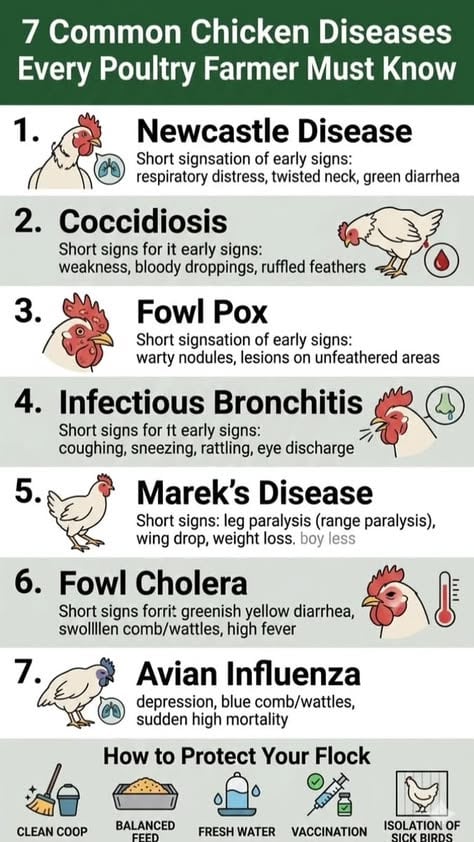
Clinical signs vary with the strain and the age and immune status of your birds, but common warning signs include:
- Respiratory signs: gasping, coughing, sneezing, and rattling sounds
- Nervous signs: twisted necks (torticollis), paralysis of wings or legs, tremors, and circling
- Digestive signs: greenish or whitish watery diarrhoea
- Reproductive signs: sudden drops in egg production, soft-shelled or misshapen eggs
- General signs: depression, swollen tissues around the eyes and neck, ruffled feathers, and sudden death — sometimes with mortality reaching very high levels in unvaccinated flocks
Have you ever noticed a sudden egg production drop with no obvious feed or management change? That alone justifies investigating Newcastle disease, especially in unvaccinated or poorly vaccinated birds.
Confirming the Diagnosis
Field signs alone are not enough, because ND can resemble avian influenza, infectious bronchitis, and fowl cholera. Proper diagnosis involves laboratory confirmation — virus isolation, haemagglutination-inhibition testing, or molecular assays such as RT-PCR. Importantly, molecular analysis of the fusion (F) protein cleavage site allows laboratories to classify an isolate as virulent or not.
Because virulent NDV is a notifiable disease to the World Organisation for Animal Health (WOAH, formerly OIE), suspected outbreaks should be reported to your local veterinary authorities immediately. Rapid reporting is not just a legal formality — it is what stops one farm's problem from becoming a regional epidemic.
Treatment: The Hard Truth
Here is the part many farmers do not want to hear: there is no specific treatment for Newcastle disease. No antibiotic, herbal remedy, or supplement will eliminate the virus.
What you can do is supportive care:
- Keep affected birds warm, comfortable, and well fed. Stress worsens outcomes.
- Watch for secondary bacterial infections. Damaged respiratory systems are vulnerable to complications such as air sac disease and chronic respiratory disease. A veterinarian may advise appropriate antibiotics to control these secondary infections — but always under professional guidance, never by guesswork.
- Isolate and humanely cull severely affected birds to reduce the viral load spreading through the flock.
- Disinfect thoroughly. Clean and disinfect housing, equipment, feeders, and drinkers once the outbreak is controlled.
Birds that survive become immune to reinfection, but they may continue shedding the virus for some time — another reason why mixing survivors with new, unexposed birds is risky.
Prevention: Where the Real Battle Is Won
Since treatment does not exist, prevention is your entire strategy. It rests on two pillars: vaccination and biosecurity.
Vaccination
Vaccination is the cornerstone of ND control. Common vaccine types include:
- Live lentogenic vaccines (such as LaSota, B1, and similar strains) — widely used, affordable, and given through drinking water, eye drops, or spray
- Inactivated (killed) vaccines — usually injected, providing stronger and longer-lasting immunity, often used in layers and breeders
A few practical rules make vaccination actually work:
- Follow a schedule designed with your veterinarian, not a copied calendar from a neighbour. Maternal antibodies, local disease pressure, and bird type all affect timing.
- Respect the cold chain. Vaccines exposed to heat lose potency. If your vaccine travelled in a warm car for hours, you may be vaccinating with expensive water.
- Administer correctly. Poor drinking-water vaccination technique — untreated chlorinated water, uneven distribution, thirsty birds — is a common cause of vaccine failure.
- Vaccinate healthy birds only. Vaccinating sick or stressed birds gives poor results.
Even well-vaccinated flocks can experience reduced protection under heavy viral challenge, which is why vaccination alone is never enough.
Biosecurity and Hygiene
Think of biosecurity as the fence around your vaccination programme. Practical steps include:
- Never introduce birds of unknown health status into your flock. Quarantine new arrivals for at least two to three weeks.
- Control visitors, vehicles, and equipment entering your farm. Footbaths and dedicated farm clothing are cheap insurance.
- Limit contact with wild birds and free-ranging birds, which can carry the virus.
- Clean and disinfect housing between flocks, and practise all-in/all-out management where possible.
- Source day-old chicks from reputable hatcheries with documented vaccination programmes.
For small-scale and backyard farmers — including many Kenyan producers keeping indigenous or improved dual-purpose birds — these steps matter even more, because unvaccinated village flocks often act as reservoirs that reinfect commercial operations nearby.
Putting It All Together
Newcastle disease rewards preparation and punishes complacency. Your realistic action plan looks like this: vaccinate on a vet-approved schedule with properly handled vaccines, quarantine every new bird, restrict farm access, watch for early signs like respiratory distress and sudden egg drops, and report suspected outbreaks immediately rather than hoping they pass.
If an outbreak does strike, focus on supportive care, secondary infection control under veterinary guidance, and rigorous disinfection — not on searching for a cure that does not exist.
What does your current vaccination schedule look like — and when did you last review it with a veterinarian?
Newcastle disease is one of those topics where the farmers who prepare early are the ones who sleep well. If this guide helped you, follow Poultry Market for more practical poultry health and farming content, share it with a fellow farmer who keeps birds, and drop a comment below — we would genuinely like to hear how you handle vaccination and biosecurity on your farm.