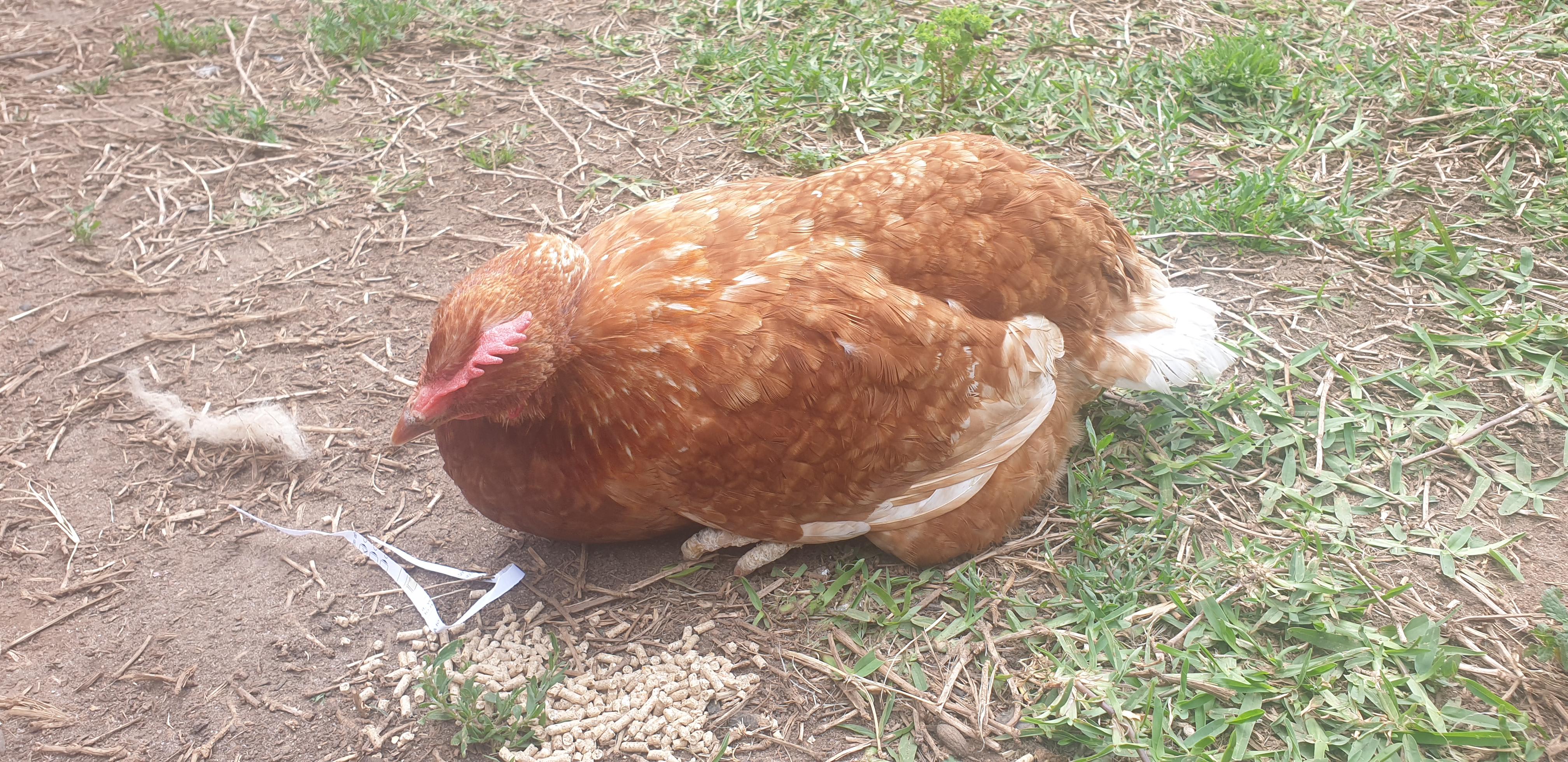
Imagine walking into your chicken house one morning and noticing one bird sitting oddly, one leg stretched forward and the other backward, unable to stand. A week later, two more birds show the same strange paralysis. By the time you start asking questions, you have lost several birds and still do not know what you are dealing with. For many poultry farmers, that is how Marek's disease announces itself — quietly, then expensively.
Marek's disease is one of the most common and economically damaging viral diseases of chickens worldwide. It affects commercial flocks roughly between 5 and 35 weeks of age, and it shows up in backyard flocks too. The frustrating part? There is no treatment once a bird is infected. Everything depends on prevention, and that is exactly what this article will help you understand.
What Causes Marek's Disease?
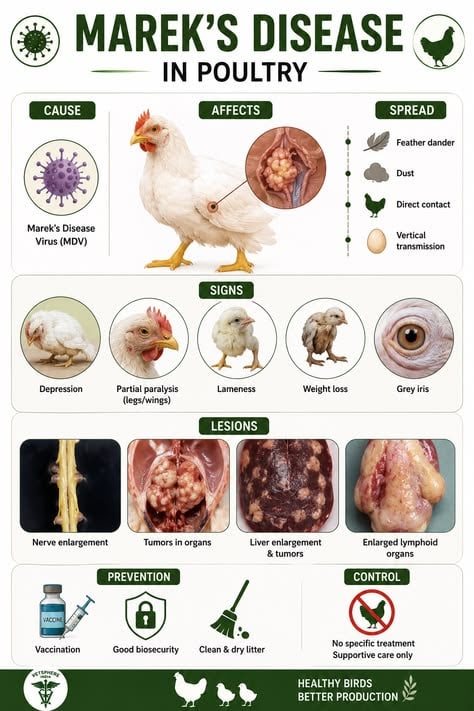
Marek's disease is caused by an oncogenic (tumor-inducing) herpesvirus. It is highly contagious and spreads mainly through feather follicle debris and dander — the tiny skin flakes and dust that infected birds shed into the environment. Once the virus contaminates a poultry house, it can survive in dust and litter for a long time, which is why farms that have had Marek's before often struggle with it again.
Birds inhale or ingest the contaminated dust, become infected, and then shed the virus themselves. The virus does not spread through the egg, but day-old chicks are extremely vulnerable to infection from the environment the moment they arrive.
One thing worth knowing: highly pathogenic strains, sometimes called very virulent Marek's disease (vvMD) strains, exist and can cause severe losses even in vaccinated flocks. This is why vaccination alone is not the whole answer.
Recognizing the Signs
Marek's disease is frustrating because it does not look the same in every bird. It appears in several distinct syndromes, and knowing them helps you spot trouble earlier.
The classic form (fowl paralysis)
This is the best-known presentation. The virus attacks the peripheral nerves, causing them to enlarge, and the result is partial or complete paralysis of the legs and wings. A bird may lie on its side with one leg stretched forward and one backward — the classic "splits" posture. Birds may also show drooping wings, difficulty breathing if neck nerves are involved, and weight loss because paralyzed birds cannot reach feed and water.
The acute form (lymphomas)
Here, the virus produces T-cell lymphomas — tumors in internal organs such as the liver, spleen, kidneys, ovaries, and heart. Birds may simply appear depressed, lose weight, and die without obvious paralysis. This form can cause sudden, significant mortality in a flock, typically in birds between 8 and 20 weeks of age.
Other presentations
- Ocular (eye) form: The iris turns gray and the pupil becomes irregular, leading to partial or total blindness. Farmers sometimes call this "gray eye."
- Cutaneous (skin) form: Swollen, enlarged feather follicles, sometimes reddened, often noticed at processing in broiler flocks. This is sometimes called skin leukosis.
Have you ever culled a bird for "lameness" without investigating further? In a flock carrying Marek's, that lameness may be telling you something much bigger is going on.
Why Diagnosis Matters
Because Marek's can look like other conditions — including lymphoid leukosis (caused by retroviruses) and simple injuries — guessing is risky. Diagnosis typically relies on a combination of flock history, clinical signs, gross necropsy findings, and histological examination of nerve and organ tissues. Enlarged sciatic nerves and tumors in internal organs are strong indicators.
If you suspect Marek's in your flock, involve a veterinarian or a diagnostic laboratory rather than self-diagnosing. Culling affected birds early and confirming the cause protects the rest of your flock and informs your next vaccination decisions.
Control: Prevention Is Your Only Real Weapon
Here is the hard truth: there is no treatment for Marek's disease. Once a bird develops tumors or paralysis, it will not recover. Control rests on three pillars.
1. Vaccination
Vaccination is highly effective at preventing tumors and death, and it is the backbone of Marek's control worldwide. Key points to understand:
- Vaccination is usually done at one day old at the hatchery, or in ovo (into the egg) in large commercial operations.
- Vaccination prevents disease, but it does not prevent infection or virus shedding. Vaccinated birds can still carry and spread the virus.
- It takes roughly 7 to 14 days for vaccinated chicks to develop solid protection. If chicks are exposed to heavy viral contamination before that, the vaccine may not save them.
That last point surprises many farmers. A vaccinated chick placed into a heavily contaminated house can still break with the disease. Vaccination and hygiene must work together.
2. Hygiene and biosecurity
Because the virus persists in dust and dander, reducing environmental contamination is critical:
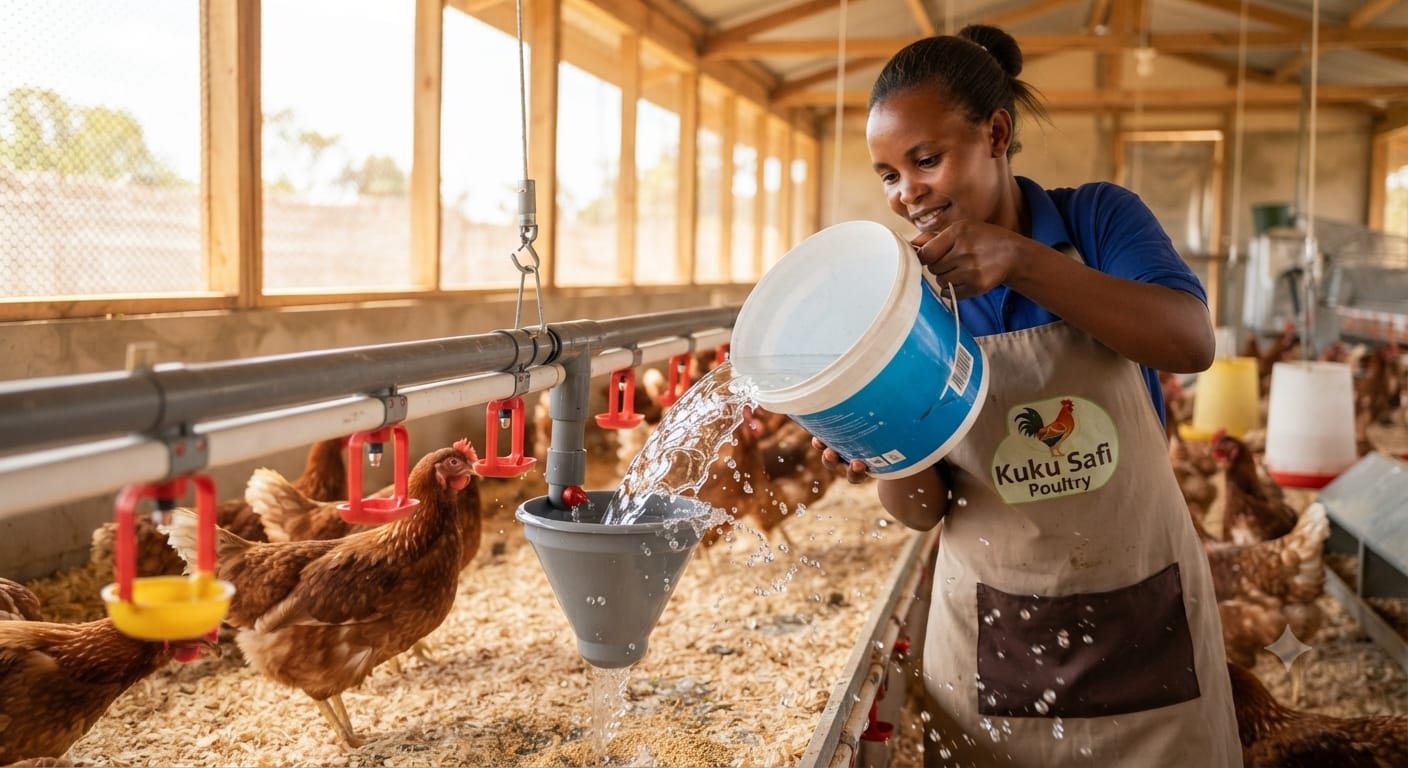
- Clean and disinfect houses thoroughly between flocks, and allow downtime where possible.
- Raise chicks separately from older birds — ideally in an all-in, all-out system by age group.
- Control dust, and avoid moving equipment, crates, or footwear between age groups without cleaning.
- Source day-old chicks from reputable hatcheries that vaccinate reliably.
3. Genetic resistance
Some chicken lines are genetically more resistant to Marek's disease than others. Commercial breeders select for this, but if you keep indigenous or backyard birds, be aware they may vary widely in susceptibility. When restocking, ask your supplier about the Marek's vaccination status and the breed's general hardiness.
What This Means for Your Farm
Think about the economics for a moment. Suppose you raise 500 layers and an undiagnosed Marek's problem kills 5 to 10 percent of your pullets before point of lay. You have spent months of feed and housing costs on birds that will never produce an egg. Compare that loss to the small per-bird cost of vaccinated day-old chicks and a disciplined cleaning routine. Prevention is almost always the cheaper option.
For small-scale and backyard farmers, the most practical steps are simple: buy vaccinated chicks, keep young birds away from older stock, clean between batches, and isolate or cull sick birds promptly. For commercial producers, work with your veterinarian and hatchery on a vaccination program matched to the virus pressure in your area, especially if very virulent strains have been reported nearby.
Final Thoughts
Marek's disease rewards farmers who plan ahead and punishes those who react late. You cannot treat it, but you can almost always prevent it with timely vaccination, strict hygiene, and smart flock management. If you have seen unexplained paralysis or sudden deaths in young birds, do not wait — get a proper diagnosis and tighten your prevention program before the next batch arrives.
Have you dealt with Marek's disease in your flock? Share your experience or questions in the comments — your story could help another farmer catch the signs earlier. And if you found this useful, pass it on to a fellow poultry keeper and follow Poultry Market for more practical, no-nonsense poultry health guidance.