A farmer can lose a third of a growing flock in five days and still not know what killed the birds. That is the cruel part of poultry disease: by the time one bird is visibly sick, the rest have usually been exposed for longer than you realise. Coughing at night, a few birds sitting with ruffled feathers, slightly watery droppings that nobody cleaned up properly — these small signals are often the only warning you get.
This article looks at six of the most dangerous chicken diseases, what to watch for in each, and how natural herbal remedies can support prevention. It is important to be clear from the start: herbs are not a replacement for vaccination, clean water, dry bedding, or a veterinarian. They work best as part of a routine that keeps birds strong enough to resist infection in the first place.
Why prevention beats treatment every time
Treating sick birds is expensive, uncertain, and often too late. Birds that recover from a serious viral infection may never reach their growth or laying potential, and some become carriers that quietly spread the disease to the next batch. Prevention also protects your market. Buyers in Kenyan towns and estates quickly lose confidence in a supplier whose birds look unthrifty, and rebuilding that trust takes far longer than the illness itself.
Your real goal is not to treat disease. It is to give your flock conditions where disease struggles to gain a foothold.
Six dangerous diseases to know by sight
1. Newcastle disease
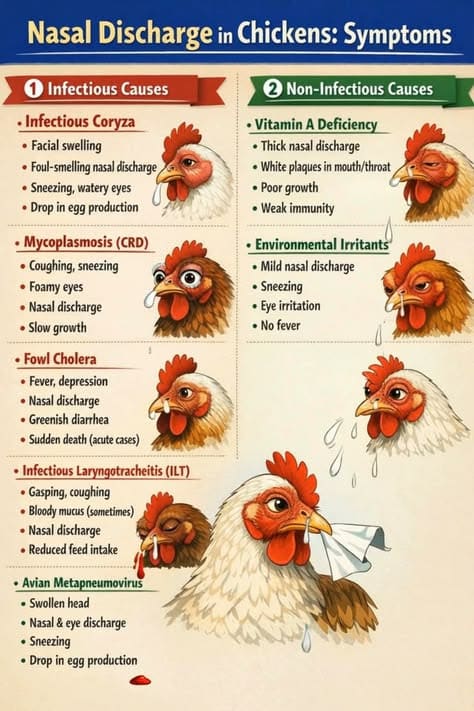
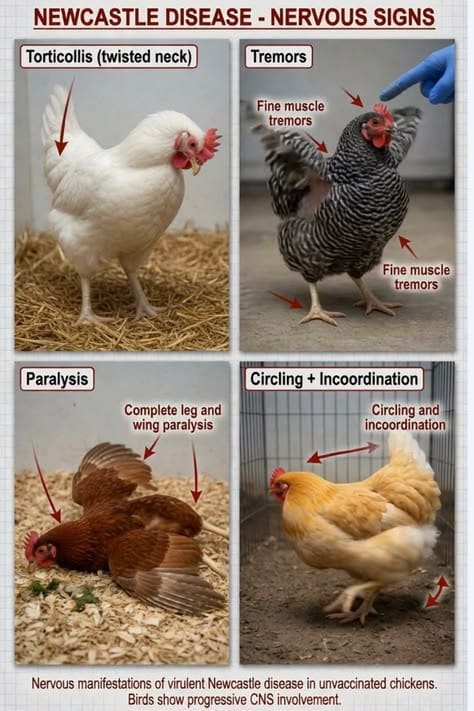
Newcastle disease is one of the fastest and most devastating viral infections in poultry. It can wipe out an unvaccinated flock within days. Watch for gasping, coughing, greenish droppings, twisting of the neck, paralysis, and a sudden drop in egg production. There is no effective cure once birds are infected, which is why vaccination and strict isolation of new birds matter so much.
2. Avian influenza (bird flu)
Bird flu is dangerous both for the flock and because of its public health implications. Signs include sudden death, swollen heads, discolouration around the comb and wattles, breathing difficulty, and a sharp fall in laying. Any suspicion of avian influenza should be reported to the relevant veterinary authorities immediately rather than managed at home.
3. Infectious bursal disease (Gumboro)
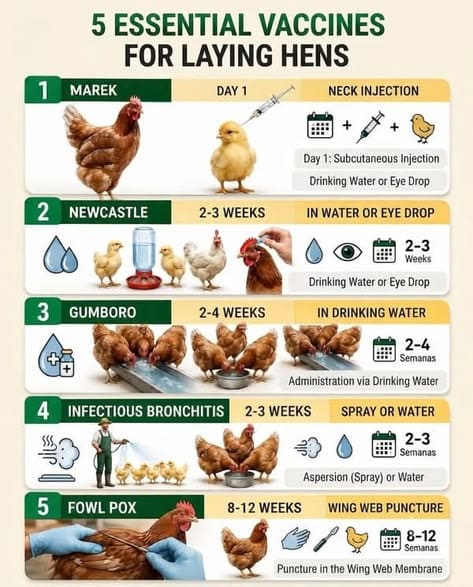
Gumboro attacks the immune system, especially in young birds. The damage is often invisible at first: birds that look dull, have watery or whitish droppings, and then become vulnerable to other infections they would normally fight off. Vaccination of breeders and chicks, depending on the programme used, is the standard control measure.
4. Marek's disease
Marek's disease causes tumours, paralysis, and blindness, and it often shows up in birds that are otherwise well grown. Affected birds may sit with one leg forward and one back, or fail to thrive while pen mates grow normally. It is controlled through vaccination at hatch and by reducing stress and overcrowding, which allow the virus to spread.
5. Fowl pox
Fowl pox appears as raised scabs on unfeathered skin such as the comb, wattles, and around the eyes, or as lesions in the mouth and throat in the wet form. It spreads slowly but persistently, often through biting insects and wounds. Vaccination, mosquito control, and reducing skin injuries help limit outbreaks.
6. Coccidiosis
Coccidiosis is a parasite problem that thrives in damp, dirty litter. It is one of the most common causes of bloody droppings, huddling, poor feed conversion, and slow growth in chicks and growers. Because the parasite builds up in the environment, management matters as much as any product you buy.
Where herbal remedies fit, and where they do not
Herbs are best understood as flock support, not medicine. Their realistic roles are:
- Supporting gut health and appetite during stress, weaning, or weather changes.
- Helping keep the environment cleaner, through antimicrobial effects in litter or water.
- Reducing parasite pressure in a mild, ongoing way.
- Providing nutrients and antioxidants that help birds cope with challenge periods.
What herbs cannot do is stop a highly pathogenic virus, replace a vaccine, or cure an advanced infection. If birds are dying daily, the correct response is diagnosis by a qualified veterinarian, not a stronger herbal drench. Be equally careful with any source that gives you exact herbal dosages as though they were clinical prescriptions. Birds differ in age, weight, breed, and health status, and blanket doses can do harm.
Herbs commonly used around poultry
Garlic is widely used in poultry keeping, usually crushed or soaked and offered in drinking water in small amounts. Farmers use it mainly for general conditioning and to encourage water intake during heat or transport stress.
Oregano is one of the herbs most often discussed for gut support in poultry. It is typically used as a dried herb mixed into feed or as a mild infusion, rather than as a concentrated extract.
Neem is valued for its repellent and antimicrobial properties. Leaves are sometimes dried and added to litter or used around the compound to discourage insects, though strong concentrations should be avoided.
Moringa leaves are used as a nutrient supplement, dried and crumbled into feed. They are also a practical option for farmers who already grow the tree for other purposes.
Aloe vera is used mainly for its soothing and gut-supportive reputation, usually as a small amount of fresh gel in water. It should be introduced gradually.
Turmeric and ginger are used as digestive and general conditioning supplements, often grated or powdered and mixed into moist feed.
Chilli or black pepper is used by some farmers in tiny quantities to stimulate appetite, though this should be done cautiously and never with very young chicks.
Whichever herb you choose, introduce it to a small group first, observe for a full week, and stop immediately if birds reject the feed or show loose droppings. Record what you used, how much, and what changed, so you are making decisions based on your own flock rather than guesswork.
The prevention routine that actually works
Herbs only make sense on top of these basics:
- Vaccinate on schedule and keep written records of every batch, date, and product used.
- Keep litter dry. Turn wet bedding quickly, especially during rainy seasons, since coccidiosis builds fast in damp conditions.
- Control stocking density. Overcrowded birds stress each other and spread infection through direct contact.
- Isolate new birds for at least two to three weeks before mixing them with the flock.
- Clean and disinfect feeders, drinkers, and houses between batches, and allow houses to dry and rest.
- Manage insects and rodents, which carry fowl pox and other diseases into the house.
- Provide clean water daily and store feed where it cannot mould.
- Watch your birds every morning while they are active, not after they have gone quiet.
If you keep birds near Nairobi or in a busy urban and peri-urban area, also think carefully about where your birds came from. Live birds sold in open markets often come from multiple sources mixed together, which is one of the fastest ways to bring a new disease home.
A simple weekly habit
Set aside ten minutes each week to count your birds, check droppings, look at combs and eyes, and note feed consumption. Most serious outbreaks announce themselves in feed intake and droppings long before a bird collapses. That short routine will tell you more about your flock's health than any single remedy.
Natural herbal support can be a useful part of a healthy flock, but it works because the birds were already well fed, well housed, vaccinated, and observed. Build those foundations first, then use herbs as the extra layer of support they were meant to be. You can also read more about recognising the early warning signs in this guide to six dangerous chicken diseases and how to prevent them.
Which of these six diseases worries you most on your farm, and what has worked for you so far? Share your experience in the comments, follow Poultry Market for practical poultry health and management content, and pass this on to a fellow farmer who is still learning to read the early signs.