500-Layers Profit Work Plan Kenya – Costs, Revenue & Scalability
Introduction: Why 500 Layers Is the Sweet Spot for Kenyan Farmers
For smallholder and commercial poultry farmers in Kenya, a 500-layer flock represents a balanced starting point that minimizes risk while maximizing scalability. This number allows for manageable operations, sufficient revenue to cover costs, and room to expand as capital grows. Layers typically start laying eggs at 18–20 weeks, and with proper management, a 500-bird flock can generate consistent income while keeping operational complexity low. According to Huduma Global, this scale is ideal for farmers aiming to enter the egg market without overextending their resources.
Initial Investment Breakdown: What It Costs to Start
Starting a 500-layer farm requires a well-planned initial outlay. Below is a detailed breakdown of key costs based on 2024 market rates in Kenya:
1. Housing
- Cost: KSh 120,000
- Details: A well-ventilated, predator-proof house with proper lighting and space for 500 birds. A 5m x 10m structure with raised flooring and adjustable feeders/waterers suffices. Use materials like iron sheets, wood, and concrete for durability.
2. Day-Old Chicks (DOCs)
- Cost: 500 chicks x KSh 200 = KSh 100,000
- Details: Purchase from reputable hatcheries to minimize disease risk. Factor in 5% mortality (25 birds) for the first 6 months, as noted in Uganda’s Poultry Training Manual.
3. Feed for 6 Months
- Cost: ~KSh 150,000
- Details: Layers require a 3-phase feeding system: starter (0–6 weeks), grower (7–18 weeks), and layer feed (19+ weeks). Allocate:
- Starter feed: 2kg/bird x 500 = 1,000kg at KSh 150/kg = KSh 150,000 (for 6 weeks)
- Grower feed: 1.5kg/bird x 500 = 750kg at KSh 130/kg = KSh 97,500
- Layer feed: 0.1kg/day x 500 x 180 days = 9,000kg at KSh 120/kg = KSh 1,080,000
Total feed cost over 6 months: ~KSh 1.327 million. Adjust for local prices and bulk discounts.
4. Vaccines and Medications
- Cost: KSh 25,000
- Details: Essential vaccines include Marek’s (at hatch), Newcast (day 7), Gumboro (day 14), and Fowlpox (day 30). Regular deworming and antibiotics for disease outbreaks add to this cost.
5. Equipment and Infrastructure
- Cost: KSh 50,000
- Details: Feeders, waterers, egg collection trays, lighting systems, and a small generator for backup power. Nipple drinkers are recommended for hygiene Huduma Global.
6. Labour
- Cost: KSh 30,000/month for 1–2 part-time workers
- Details: Daily tasks include feeding, cleaning, egg collection, and monitoring health. Skilled labor is crucial to prevent disease outbreaks and maintain productivity.
Total Initial Investment: ~KSh 500,000 (excluding ongoing operational costs)
Monthly Operating Costs: What to Budget for
After the initial setup, monthly costs are primarily driven by feed, labor, and utilities. Here’s a realistic breakdown:
1. Feed
- Cost: KSh 90,000–120,000/month
- Details: Feed constitutes 70–80% of operating costs. A 500-layer flock consumes ~150–200kg of layer feed monthly (0.3kg/bird). At KSh 120/kg, this totals KSh 18,000–24,000. Add 10–15kg of grit and oyster shells for eggshell quality.
2. Labour
- Cost: KSh 20,000–30,000/month
- Details: Hire 1–2 workers for daily tasks. If managing alone, allocate KSh 10,000/month for time value.
3. Water and Electricity
- Cost: KSh 5,000–10,000/month
- Details: Water for drinking and cleaning; electricity for lighting and water pumps. Solar-powered systems can reduce costs long-term.
4. Miscellaneous
- Cost: KSh 5,000–10,000/month
- Details: Replacement parts, additional vaccines, and emergency medications.
Total Monthly Operating Costs: KSh 120,000–170,000
Revenue Projections: How Much Can You Earn?
A 500-layer flock can generate consistent revenue if managed well. Here’s the math:
1. Egg Production
-
Assumptions:
- 80–84% production efficiency (400–420 eggs/day) Uganda’s Poultry Training Manual
- 1 tray = 30 eggs
-
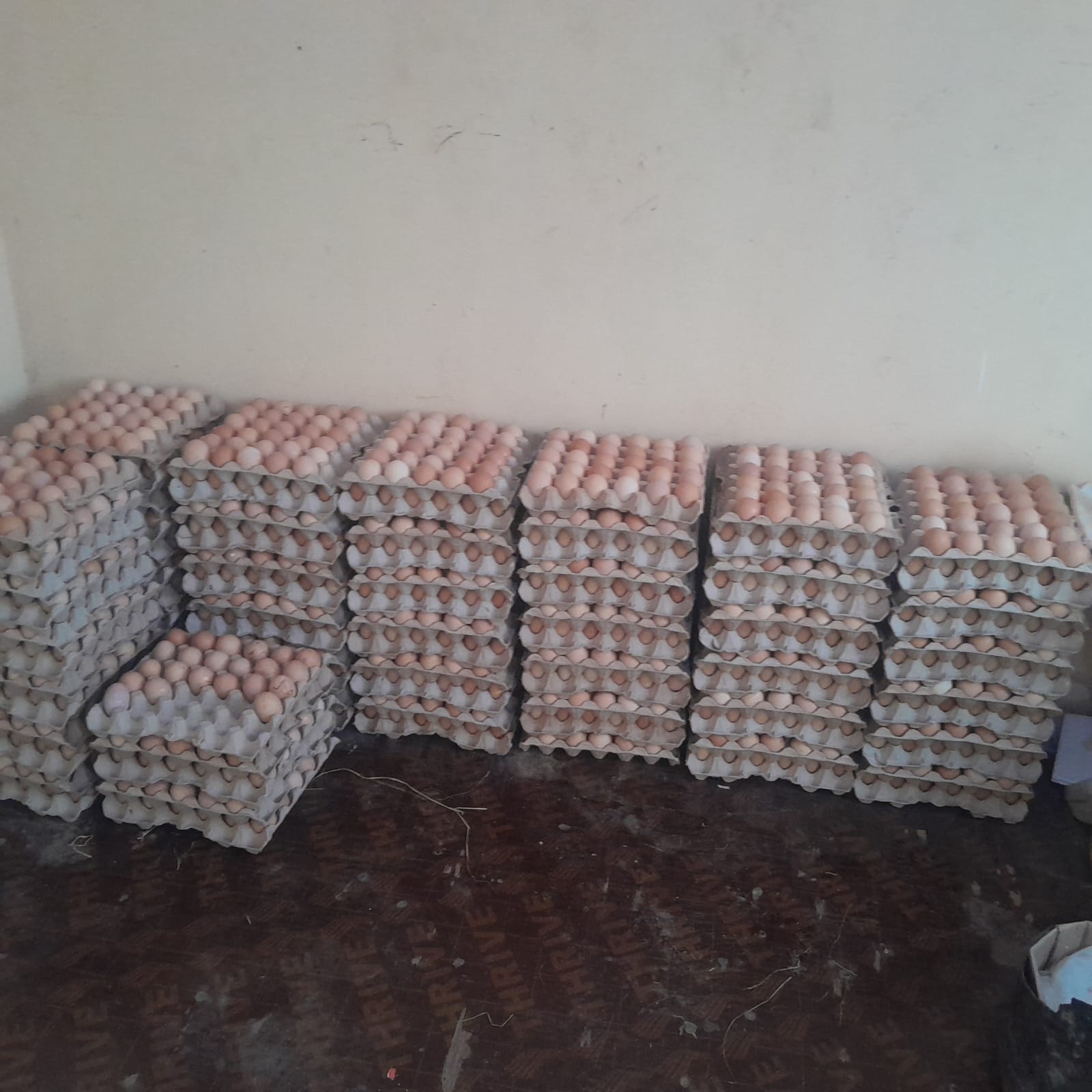
Daily Output: 17–18 trays/day
-
Monthly Output: 510–540 trays/month
2. Egg Sales
- Price per Tray: KSh 280–300 (varies by region)
- Daily Revenue: 17–18 trays x KSh 280 = KSh 4,760–5,040
- Monthly Revenue: 510–540 trays x KSh 280 = KSh 142,800–151,200
3. Additional Income Streams
- Manure Sales: 500 layers produce ~1.5 tons of manure/year. Sell at KSh 1,500/bag (50kg) for KSh 45,000/year.
- Old Birds: At 70+ weeks, cull hens sell for KSh 200–250 each. 500 birds = KSh 100,000–125,000.
Total Monthly Revenue: KSh 142,800–151,200 (excluding manure and old birds)
Profitability and Break-Even Analysis
Monthly Profit
- Revenue: KSh 142,800–151,200
- Operating Costs: KSh 120,000–170,000
- Net Profit: KSh 22,800–31,200/month (after 6 months, when birds start laying)
Note: Initial 6 months require reinvesting profits to cover feed costs before achieving positive cash flow.
Break-Even Timeline
- Total Initial Investment: KSh 500,000
- Monthly Profit (after 6 months): ~KSh 27,000
- Break-Even Period: ~19 months (KSh 500,000 ÷ KSh 27,000/month)
Return on Investment (ROI)
- Payback Period: ~1.5 years
- Annual Profit: KSh 324,000 (after break-even)
Scalability: Expanding to 1,000+ Layers
A 500-layer farm can scale by doubling housing, feed, and labor inputs. Here’s how:
1. Infrastructure
- Cost for 1,000 Layers: Double housing (KSh 240,000), DOCs (KSh 200,000), and equipment (KSh 100,000). Total initial investment: ~KSh 1.1 million.
2. Feed and Labour
- Feed Cost: KSh 270,000–360,000/month
- Labour: KSh 40,000–60,000/month
3. Revenue Potential
- Egg Output: 800–840 eggs/day (67–70 trays)
- Monthly Revenue: KSh 280/tray x 2,010–2,100 trays = KSh 562,800–588,000
- Monthly Profit: ~KSh 150,000–200,000
4. Break-Even for 1,000 Layers
- Total Investment: KSh 1.1 million
- Monthly Profit: KSh 175,000
- Break-Even Period: ~6.5 months
Challenges and Mitigation Strategies
1. Feed Price Volatility
- Problem: Feed costs can spike due to maize, soya, and soybean price fluctuations.
- Solution:
- Partner with local feed mills for bulk discounts.
- Grow green fodder (e.g., Napier grass) to reduce reliance on commercial feed.
2. Disease Outbreaks
- Problem: Newcastle, Gumboro, and coccidiosis can decimate flocks.
- Solution:
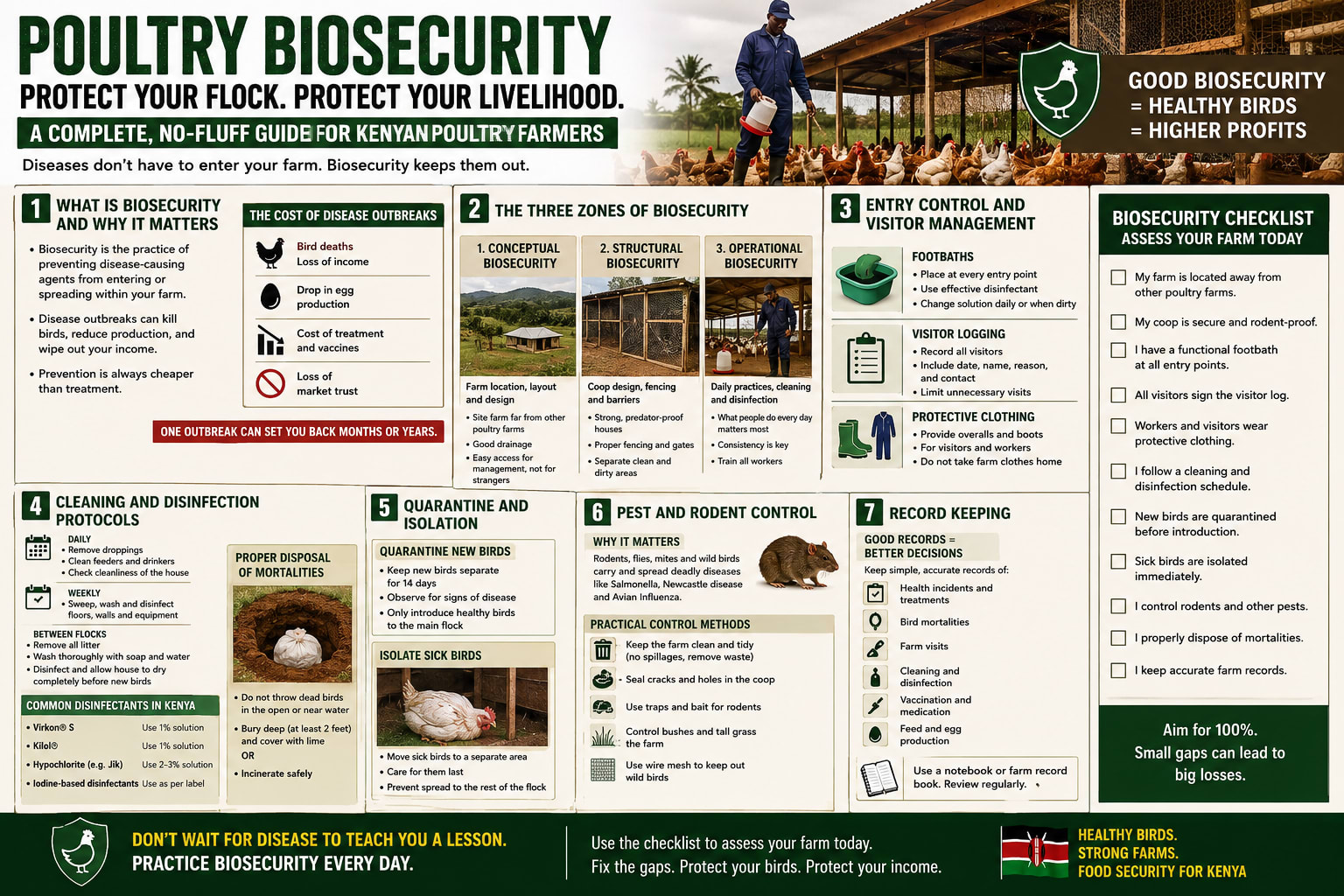
- Follow a strict vaccination schedule.
- Isolate sick birds immediately.
- Use probiotics and herbal remedies like neem leaves to boost immunity.
3. Egg Price Fluctuations
- Problem: Prices drop during oversupply (e.g., holidays) or due to poor quality eggs.
- Solution:
- Focus on quality: Use calcium-rich feed for strong shells.
- Build long-term contracts with local retailers or schools.
Pro Tips for Success
- Track Costs and Revenue Daily: Use a spreadsheet or app like Poultry Market Kenya to monitor performance.
- Optimize Feed Conversion: Use layer feed with 18–20% protein and avoid overfeeding.
- Automate Where Possible: Nipple drinkers and automatic feeders reduce labor and waste.
- Diversify Income: Sell manure, hatchlings, or offer poultry training sessions.
Conclusion: Is a 500-Layer Farm Right for You?
A 500-layer poultry farm offers a viable path to profitability for Kenyan farmers, with a clear roadmap for scaling. While challenges like feed costs and disease exist, careful planning and access to resources like Poultry Market Kenya can mitigate risks. Start small, stay disciplined, and reinvest profits to grow your operation sustainably.
Key Takeaways
- A 500-layer farm requires ~KSh 500,000 initial investment and generates KSh 50,000–70,000/month profit.
- Break-even occurs in ~19 months, with scalability to 1,000+ layers in 6.5 months.
- Mitigate risks through vaccination, feed optimization, and market diversification.
Need help with feed formulation, disease management, or market access? Visit Poultry Market Kenya for expert guidance and tools tailored to your farm!