Biosecurity in Poultry Farming: A Complete Guide for Kenyan Farmers
What is Biosecurity and Why It Matters
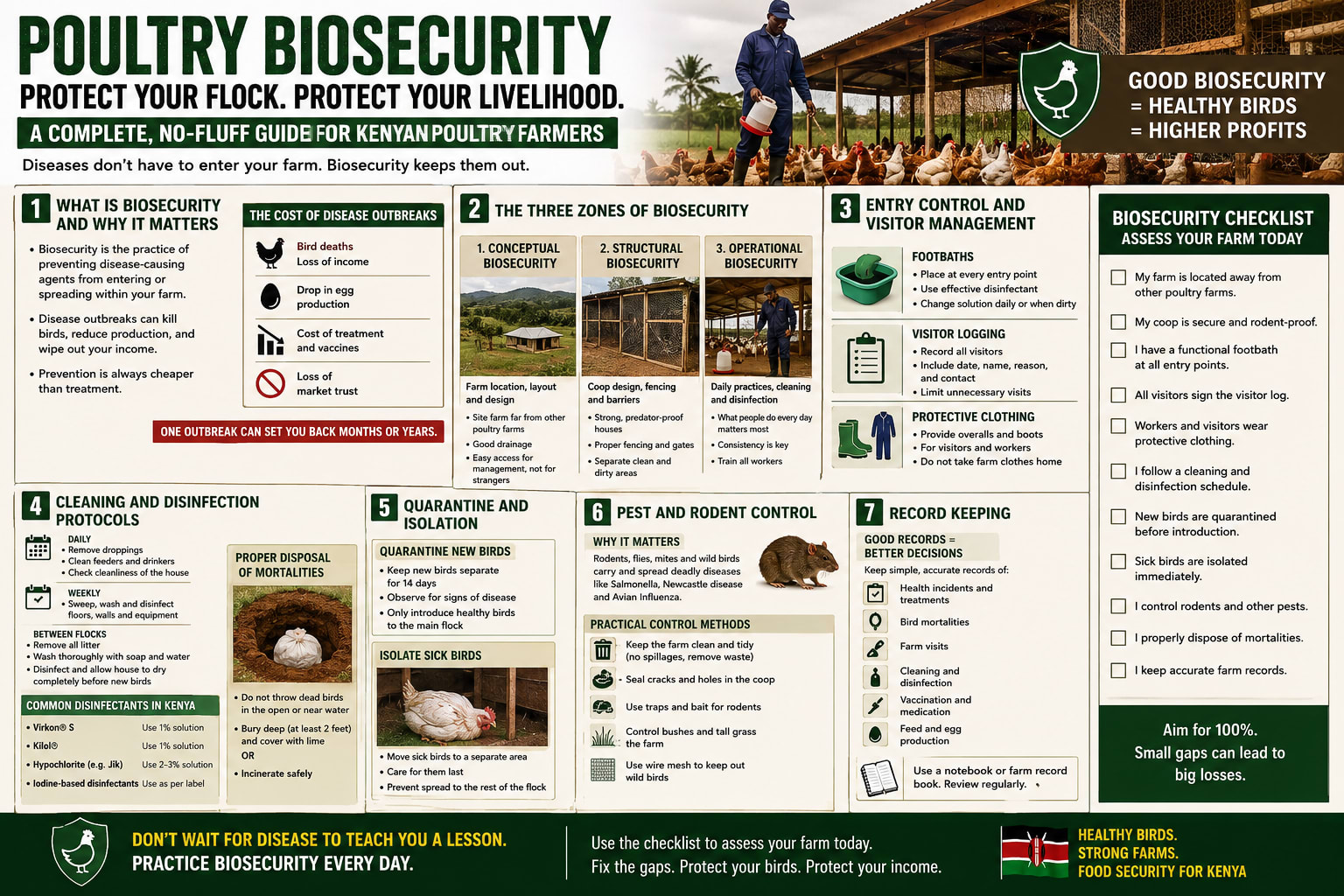
Biosecurity refers to practices that prevent the introduction and spread of infectious diseases on poultry farms. In Kenya, where poultry farming is a critical source of income and food security, biosecurity is not optional—it is essential. A single disease outbreak can wipe out entire flocks, leading to financial ruin for smallholder and commercial farmers alike. For example, avian influenza outbreaks in 2022 cost Kenyan poultry farmers over KES 2 billion in losses. Prevention through biosecurity is far more cost-effective than treatment, which often involves expensive medications, labor, and potential culling.
The Three Zones of Biosecurity
1. Conceptual Biosecurity
- Farm Location: Choose sites away from other poultry farms, water sources, and human settlements to reduce disease transmission risks.
- Layout and Design: Separate housing zones (e.g., breeding, laying, processing) to minimize cross-contamination.
2. Structural Biosecurity
- Coop Design: Use elevated, well-ventilated coops with smooth, easy-to-clean surfaces.
- Fencing and Barriers: Install secure fencing to prevent wild birds and rodents from entering. Seal gaps in walls and roofs.
3. Operational Biosecurity
- Daily Practices: Enforce strict hygiene protocols for workers and visitors.
- Cleaning Schedules: Develop routines for feeders, waterers, and litter management.
Entry Control and Visitor Management
Uncontrolled access is a leading cause of disease spread. Implement these measures:
- Footbaths: Fill with 2% chlorine or 70% alcohol solution. Place at all entry points.
- Visitor Logging: Maintain a logbook recording names, dates, and purposes of visits.
- Protective Clothing: Require dedicated boots, gloves, and coveralls for all personnel. Provide disposable gowns for visitors.
Cleaning and Disinfection Protocols
Daily Tasks
- Remove wet litter and clean feed/water equipment.
- Disinfect high-touch areas (e.g., doors, tools).
Weekly Tasks
- Deep-clean perches and nesting boxes.
- Check and refill footbaths.
Between Flocks
- Depopulate and clean coops thoroughly.
- Use approved disinfectants like Virkon S or Jik (sodium hypochlorite) at recommended concentrations.
Mortality Disposal
- Bury carcasses in pits at least 3 meters deep, or use composting techniques.
- Never leave dead birds exposed.
Quarantine and Isolation
New birds should be isolated for 30 days before joining the main flock. For sick birds:
- Move to a separate isolation unit at least 50 meters from healthy flocks.
- Monitor symptoms and consult a veterinarian immediately.
Pest and Rodent Control
Rodents and insects transmit pathogens like Salmonella and Newcastle disease. Use:
- Snap traps and bait stations (with rodenticides approved by the Pest Control Products Board of Kenya).
- Regular inspections for droppings, gnaw marks, or nesting materials.
- Maintain clean surroundings to eliminate food/ water sources.
Record Keeping
Maintain detailed records to track biosecurity compliance:
- Health Logs: Note symptoms, treatments, and mortality rates.
- Cleaning Schedules: Document dates and staff responsible for each task.
- Visitor Logs: Track movements to trace potential contamination sources.
Biosecurity Checklist for Kenyan Poultry Farmers
Use this checklist to assess your farm:
- Are all entry points secured with footbaths?
- Is there a dedicated changing area for workers?
- Do you have a quarantine zone for new/sick birds?
- Are cleaning schedules followed religiously?
- Is mortality disposal handled safely?
- Are pest control measures in place?
By adopting these practices, Kenyan poultry farmers can significantly reduce disease risks and protect their livelihoods. Regular audits and staff training are key to sustaining biosecurity standards.