Walk into any supermarket or open-air market and you'll notice something: eggs are rarely priced individually by size, but buyers notice. A tray of big, uniform eggs sells faster, attracts repeat customers, and often earns a premium at the farm gate. If your hens are laying small or inconsistent eggs, you're leaving money on the table — and the breed you chose on day one has a lot to do with it.
Egg size is partly about management (nutrition, age of the bird, lighting), but genetics set the ceiling. Some breeds are simply built to produce large and extra-large eggs consistently. Here are ten breeds worth considering if egg size is your priority, along with honest notes on their trade-offs.
The Breeds Known for Big Eggs
1. White Leghorn
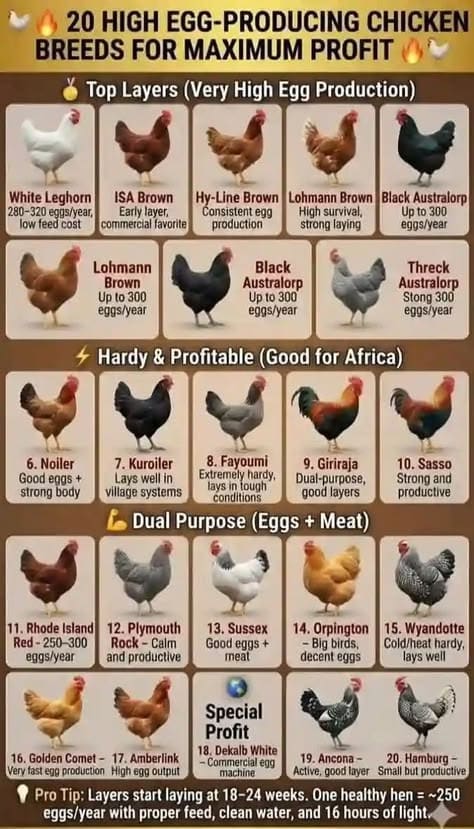
The Leghorn is the benchmark for commercial egg production. Strains vary, but good lines lay 280–320 eggs per year, and the world record — 371 eggs in 364 days — belongs to a White Leghorn hen. Their eggs are large, white-shelled, and uniform.
The catch? Leghorns are light birds with a small appetite, which is great for feed efficiency, but they're flighty and less suited to rough handling. Most commercial white-egg strains worldwide descend from the Single Comb White Leghorn.
2. Rhode Island Red
A dual-purpose breed that lays large brown eggs and keeps laying through conditions that would slow down fussier birds. Rhode Island Reds are hardy, docile, and form the genetic backbone of most modern brown-egg hybrids. Expect around 250–300 eggs a year from good stock.
3. ISA Brown (and similar brown-egg hybrids)
Technically a hybrid rather than a pure breed, but impossible to leave out. ISA Browns consistently lay large to extra-large brown eggs and are the standard choice for commercial brown-egg production in many countries, including Kenya. They convert feed efficiently and start laying early.
4. Orpington
Orpingtons are big, calm birds that lay large brown eggs — roughly 180–220 per year. That's fewer than a hybrid, but their size means a decent carcass at end of lay, and their docile temperament makes them easy to manage. If you're selling eggs and also want meat value from spent hens, an Orpington earns its keep twice.
5. Sussex
Another dual-purpose breed with a long laying season and large light-brown eggs. Sussex hens are good foragers, which matters if you're running a free-range or semi-intensive system where birds supplement their own diet.
6. Australorp
Famous for a record of 364 eggs in 365 days set in the 1920s, the Australorp remains a reliable layer of large brown eggs. They handle confinement better than Leghorns and cope reasonably well with heat when given shade and water — relevant if you're farming in warmer parts of Kenya.
7. Plymouth Rock (Barred Rock)
Steady layers of large brown eggs, cold-hardy, and calm. Barred Rocks are a solid choice for beginners because they forgive management mistakes that would knock production off a high-strung breed.
8. New Hampshire
Developed from Rhode Island Reds, New Hampshires mature early and lay large eggs with good shell quality. They're slightly better meat birds than their parent breed, which helps if you plan to sell spent hens.
9. Wyandotte
Wyandottes lay large brown eggs and are among the best winter layers among heritage breeds. They're heavier birds, so budget for a higher feed bill — research consistently shows dual-purpose breeds eat more than Leghorn-type birds.
10. Marans
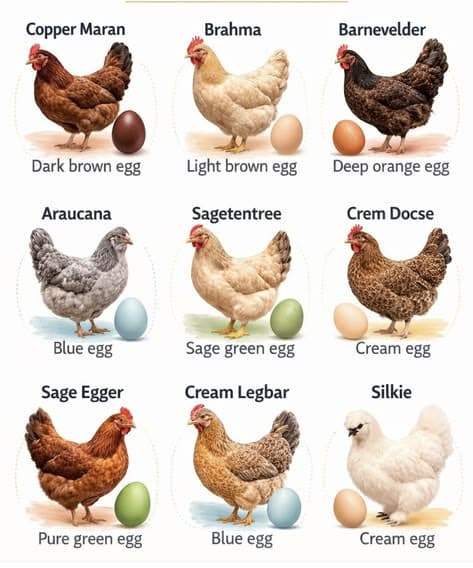
Marans lay fewer eggs (150–200 per year), but the eggs are large and famously dark brown — sometimes called "chocolate eggs." If you have access to a niche market willing to pay a premium for distinctive eggs, that lower production can still pencil out.
Big Eggs vs. Big Profits: Do the Math
Here's where many farmers get it wrong. Big eggs don't automatically mean big profits. Profit comes from egg output relative to feed cost, not egg size alone.
Consider a simple illustration:
- A Leghorn eats roughly 110–120 g of feed per day and lays ~300 eggs a year.
- A heavy dual-purpose breed may eat 130–150 g per day and lay ~200 eggs a year.
Over a year, the heavier bird might consume 7–10 kg more feed per bird while producing 100 fewer eggs. Multiply that across 500 hens and the difference in your feed bill is significant — even if each individual egg is slightly bigger.
Research comparing traditional breeds with modern hybrids confirms this pattern: dual-purpose breeds generally have higher body weights, lower laying rates, and higher feed requirements than Leghorn-type birds. That doesn't make them a bad choice — it means you need a market reason to keep them (brown eggs, premium pricing, meat value at end of lay, or hardiness in your conditions).
Ask yourself: does your buyer actually pay more for bigger or browner eggs? If your market pays the same per tray regardless, a high-output hybrid will usually beat a heritage breed on profit.
What Actually Determines Egg Size
Breed sets the potential, but management decides whether you reach it:
- Age of the hen. Pullets start with small eggs. Size increases through the laying year, peaking in the second half.
- Protein and amino acids. Undersized eggs are often a nutrition problem. Layers need adequate protein and methionine; cutting feed quality to save money usually shows up as smaller eggs within weeks.
- Body weight at point of lay. Pullets that come into lay underweight lay smaller eggs for longer.
- Heat stress. Hot conditions reduce feed intake, and egg size drops with it. Shade, ventilation, and cool water matter more than most farmers expect.
- Health. Disease pressure, even subclinical, shrinks eggs before it kills birds.
Making the Choice for Your Farm
If you're running a commercial operation in Kenya selling into wholesale markets, brown-egg hybrids like the ISA Brown or a Leghorn strain will almost always give you the best combination of egg size, numbers, and feed efficiency. If you're a smallholder selling directly to households, hotels, or niche buyers, dual-purpose breeds like the Rhode Island Red, Sussex, or Orpington offer flexibility — eggs now, meat later, and birds that tolerate less-than-perfect conditions.
Either way, source your chicks from a reputable hatchery. A "Rhode Island Red" of unknown breeding won't lay like one.
Which breeds are you currently keeping, and how are the egg sizes holding up? Share your experience in the comments — your results might help another farmer make a better choice. And if you found this useful, pass it along to someone planning their next flock, and follow Poultry Market for more practical poultry guides.