
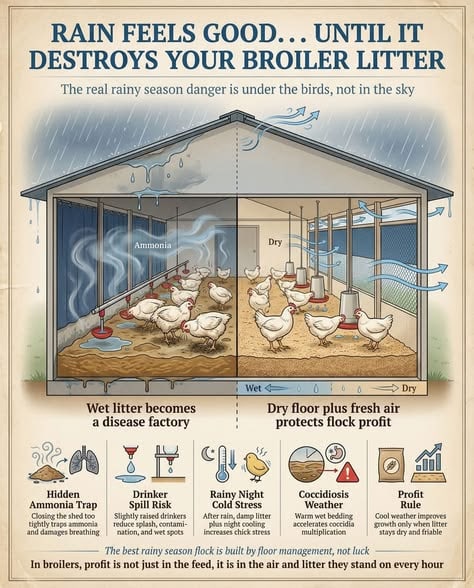
You walk into your broiler house on a rainy morning and the floor crunches under your boots — except it shouldn't crunch like that. The litter is dark, caked, and slightly warm. By afternoon, the birds near the drinkers are huddled, the air smells sharp, and you know the next few weeks are going to be harder than they should be. If you have raised broilers through a wet season, this scene is familiar. And if you haven't yet, it's coming.
Wet litter is one of the most underestimated problems in broiler production, especially during the rainy months. It doesn't just make your house unpleasant — it quietly eats into your profits through disease, poor growth, and higher mortality. Let's break down why it happens and, more importantly, what you can actually do about it.
Why Rainy Season Turns Your Litter Against You
Litter in a broiler house is supposed to absorb moisture from droppings and spilled water. Under normal dry conditions, it manages this well. But the rainy season attacks from three directions at once.
First, humidity rises. When the air is already saturated with moisture, the litter can't release its own moisture into the air through ventilation. It just keeps accumulating.
Second, water finds its way in. Leaking roofs, poor drainage around the house, and stormwater seeping under the walls all add moisture you never planned for.
Third, temperatures drop. Cooler air holds less moisture, and birds may drink and behave differently, all of which changes the moisture balance on the floor.
The result is that dark, caked layer on top of the litter that experienced farmers dread.
What Wet Litter Actually Does to Your Birds
This is where it stops being a housekeeping issue and becomes a health crisis.
Ammonia and respiratory damage. Wet litter releases ammonia. When ammonia combines with dust in the house, birds inhale high numbers of bacteria and become unable to clear them from their respiratory tract. That's the doorway to chronic respiratory problems that suppress growth for the entire flock.
Bacterial load explodes. Wet litter provides an excellent environment for E. coli to persist and reach high numbers. Higher populations of E. coli and Salmonella are consistently found in damp litter compared to dry litter. For broilers being raised for meat, this is both an animal health issue and a food safety concern.
Coccidiosis thrives. The coccidia parasite needs moisture to complete its life cycle. Wet litter during rainy season is practically an invitation for an outbreak — and coccidiosis can wipe out your margins in days through mortality, poor feed conversion, and treatment costs.
Foot pad lesions and hock burns. Birds sitting on damp, ammonia-soaked litter develop painful lesions on their feet and hocks. Beyond the welfare issue, this affects carcass quality and can reduce what buyers are willing to pay.
Have you ever noticed your birds' growth stalling mid-cycle during the rains, even when feed and breed stayed the same? Wet litter is often the hidden culprit.
Fixing the Problem: Start Outside the House
Before you touch the litter itself, look at your surroundings. Much of the moisture problem starts beyond your walls.
Drainage and site management
- Check the excavation and drainage around the building. Stormwater must be diverted away from the house, not allowed to pool against the walls or seep under the floor pad. Digging simple diversion channels uphill from the house can make a dramatic difference.
- Raise the floor level if you're building new. A house sitting lower than the surrounding ground will fight water every rainy season.
- Repair roof leaks before the rains start, not after. A small drip over three weeks becomes a permanent wet patch.
Water system discipline
Leaking drinkers are one of the biggest self-inflicted causes of wet litter. Repair water system leaks, breaks, and dripping nipples as soon as you spot them. Check water pressure too — pressure that's too high makes nipple drinkers leak even when they're in good condition. Adjust drinker height as birds grow so they drink without splashing.
Managing the Litter Itself
Once moisture is in the bedding, you need an active management routine, not a one-time fix.
- Turn the litter regularly. Caked litter should be promptly turned over by hand or mechanically so that the drier litter from beneath the cap ends up on top. The birds' body heat then helps dry the surface further.
- Add fresh dry litter on top after turning, especially in high-traffic wet zones near drinkers and feeders. This encourages birds to use the area again instead of avoiding it.
- Remove badly soaked litter entirely. Some patches are beyond saving. Shovel them out and replace with fresh, dry material. Don't just bury them.
- Stock up on dry bedding before the rains. During the wet season, wood shavings and other litter materials often become scarce or more expensive. Buying and storing dry material ahead of time is cheaper than scrambling mid-season.
Ventilation: Your Most Powerful Tool
Many farmers close up the house during the rains to keep birds warm — and accidentally create a moisture trap. Warm, humid air needs to leave the house and be replaced with drier outside air, even when it's raining.
Minimum ventilation should run continuously, not just when the house feels stuffy. In brooder setups using tarpaulins, this means managing openings deliberately rather than sealing everything shut. Use reliable thermometers to monitor conditions, because your own comfort is a poor guide to what day-old chicks or finishing broilers actually need.
The balance is this: keep birds within their comfort temperature while still moving enough air to carry moisture out. It's a skill that improves with observation — walk your house at different times of day and feel the litter with your hand.
Biosecurity During the Wet Season
Rainy season disease pressure is higher, so tighten the basics:
- Footbaths at the entrance, refreshed regularly (rain dilutes them fast).
- Limit visitors and control movement between houses.
- Keep feed dry — wet, moldy feed introduces toxins on top of everything else.
- Watch the birds daily. Early signs of coccidiosis or respiratory trouble are far cheaper to address than a full outbreak. When you suspect disease, consult a veterinarian rather than guessing at treatments.
A Quick Pre-Rainy-Season Checklist
- Roof inspected and leaks repaired
- Drainage channels cleared around the house
- Spare dry litter purchased and stored under cover
- Drinkers checked for leaks and correct pressure
- Ventilation plan reviewed for cooler, humid weather
- Footbaths and biosecurity supplies restocked
An hour of preparation before the rains is worth days of crisis management during them.
The Bottom Line
Wet litter during the rainy season isn't bad luck — it's a management challenge with known solutions. Keep water out of the house, keep air moving through it, turn and refresh the litter before it cakes, and stay ahead of disease with tighter biosecurity. Farmers who treat litter management as a daily task rather than an afterthought consistently come through the wet season with healthier birds and better weights.
How does your flock handle the rainy season? Share your experience or your biggest wet-litter challenge in the comments — your solution might be exactly what another farmer needs. Follow Poultry Market for more practical, season-by-season poultry guidance, and pass this along to a farmer who's battling damp litter right now.
