The Role of Water in Poultry Health: A Complete Guide for Kenyan Farmers
Why Water is the Most Important Nutrient
Water constitutes 55-75% of a chicken’s body weight and is critical for vital biological processes. It facilitates digestion by activating enzymes, regulates body temperature through evaporative cooling, transports nutrients to cells, and removes metabolic waste. A 12-hour water deprivation can reduce egg production by 30-50% and stunt weight gain in broilers by 20%, according to Kenya’s Department of Veterinary Services. Chronic underhydration weakens immune systems, making flocks vulnerable to diseases like coccidiosis and Newcastle.
How Much Water Do Chickens Need?
Water consumption varies by bird type and environmental conditions:
Stage/Type
Daily Consumption (liters/bird)
Day-old chicks
0.02-0.05
4-week-old broilers
0.15-0.25
Layers (peak production)
0.3-0.4
Heat-stressed birds
+30% above baseline
Factors like high ambient temperatures (above 30°C), maize-based diets, and molting increase water needs. A 1,000-bird layer farm in Kakamega may require 300-400 liters daily during cool seasons, rising to 500+ liters in hot climates like Machakos.
Water Quality – What Matters
Kenyan poultry farms commonly face challenges with:
pH imbalance: Optimal range is 6.0-7.5. Borehole water in Naivasha (pH 8.2+) requires acidification.
Contaminants: Bacteria (E. coli, Salmonella), nitrates (from fertilizer runoff), and heavy metals (lead, arsenic) in surface water.
Sediment: Common in rainwater harvesting systems in Nyanza.
Testing Your Water
Use rapid test kits from local agrovet stores for pH, total dissolved solids (TDS), and coliform presence. For comprehensive analysis, submit samples to the Kenya Bureau of Standards (KEBS) or regional agricultural offices.
Water Sources for Poultry Farms in Kenya
Source
Pros
Cons
Borehole
Reliable year-round
High initial cost, potential mineral content
Municipal
Treated supply
Limited to urban areas
Rainwater
Free, sustainable
Requires filtration, seasonal variability
Surface water
Low cost
High contamination risk
Storage Tips: Use food-grade polyethylene tanks with sealed lids. Clean storage containers monthly with 1% chlorine solution to prevent algal growth.
Water Delivery Systems
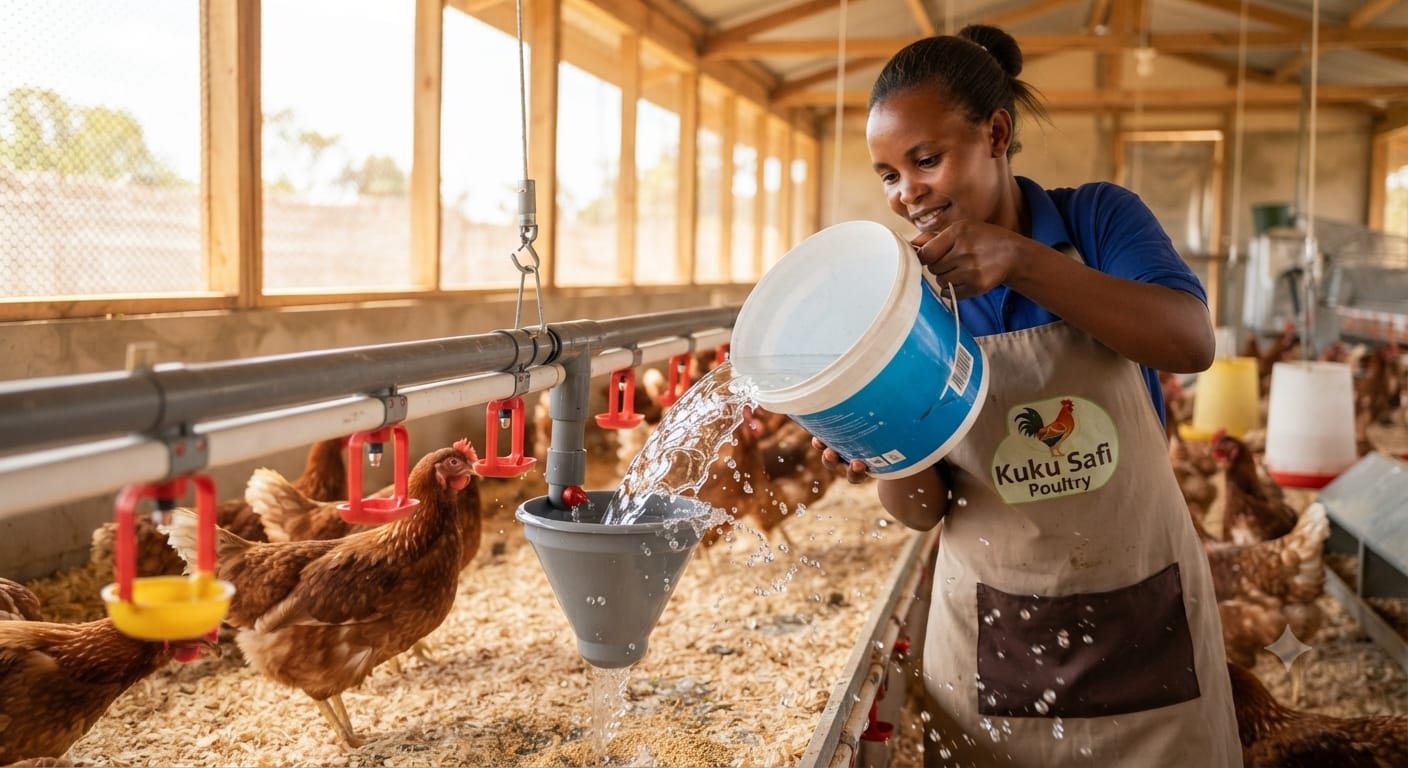
1. Nipple Drinkers
Pros: Reduce contamination, water savings (30-50% vs. open systems)
Cons: Require regular maintenance to prevent clogging
Best for: Commercial layer and broiler farms
2. Bell Drinkers
Pros: Low cost, easy to install
Cons: High evaporation, risk of fecal contamination
Best for: Small backyard flocks
3. Open Drinkers
Pros: Easy to monitor water level
Cons: High disease transmission risk
Recommendation: Use only in controlled environments with frequent cleaning
Hygiene Protocol: Disassemble and scrub drinkers weekly with food-grade disinfectants like Virkon S (available at Agrovet Stores Kenya).
Annually: Full system overhaul and water quality audit
Conclusion
Effective water management is the cornerstone of profitable poultry farming in Kenya. By investing in quality water sources, regular testing, and proper delivery systems, farmers can reduce mortality rates by up to 40% and improve feed conversion ratios by 15%. Start by testing your water today and sharing your experiences with fellow farmers through the Kenya Poultry Association forums.