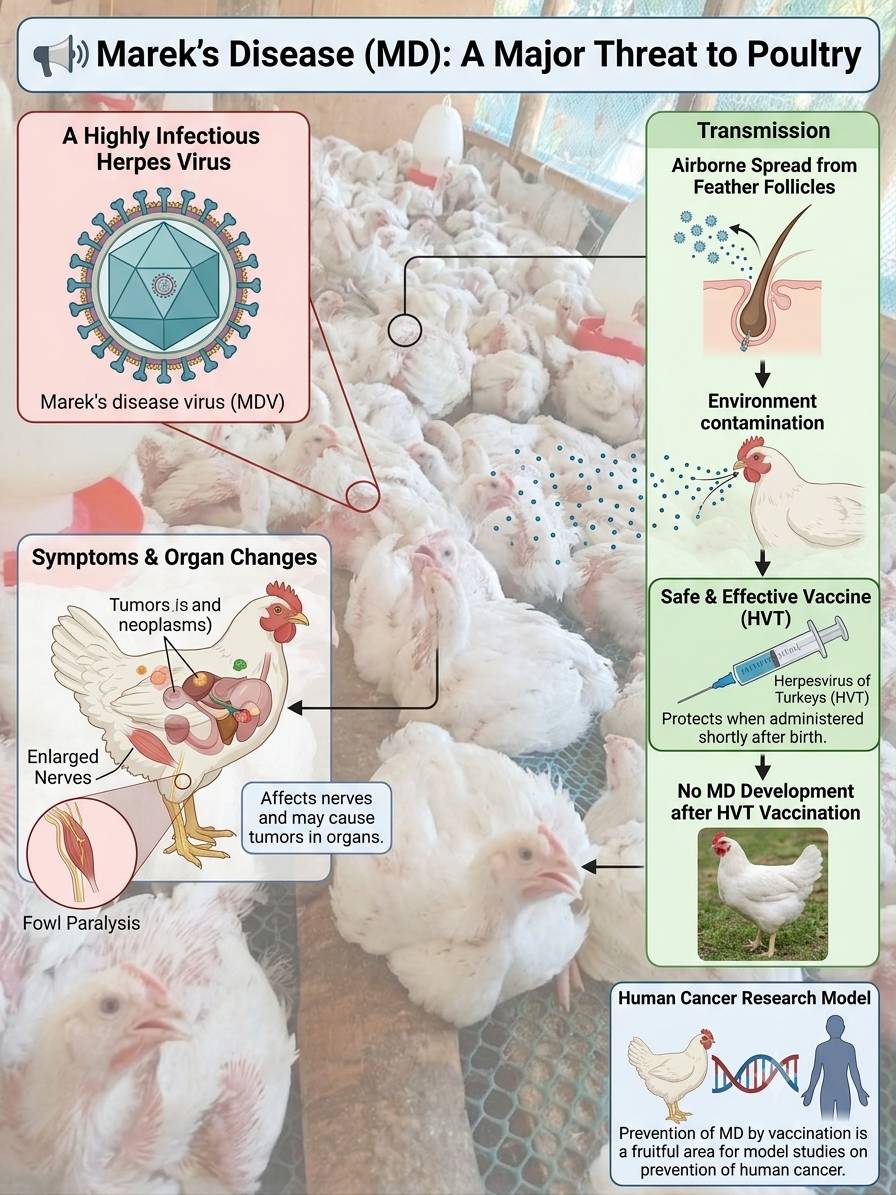
Marek's disease (MD), also known as fowl paralysis, is a highly contagious viral disease of poultry caused by an alphaherpesvirus[reference:0][reference:1]. It is one of the most common and economically devastating diseases affecting chicken flocks globally[reference:2].
The disease is characterised by T-cell lymphomas (tumours) and peripheral nerve enlargement[reference:3]. It is named after József Marek, a Hungarian veterinarian who first described it in 1907[reference:4][reference:5]. While chickens are the main species affected, the disease can occasionally occur in quail, turkeys, pheasants, and peafowl[reference:6].
Key Fact: Marek's disease is one of the most ubiquitous avian infections. Every flock, except those maintained under strict pathogen-free conditions, is presumed to be infected[reference:7].
The Cause: Understanding the Virus
Marek's disease is caused by Gallid alphaherpesvirus 2 (MDV serotype 1)[reference:8][reference:9].
Virus Strains:
The virus exists in different pathotypes with varying levels of virulence[reference:10][reference:11]:
Mild (m)
Virulent (v)
Very virulent (vv)
Very virulent plus (vv+)
Related Viruses:
Two other avirulent virus strains are commonly used as vaccines:
Gallid alphaherpesvirus 3 (MDV serotype 2) – isolated from chickens[reference:12][reference:13]
Meleagrid alphaherpesvirus 1 (turkey herpesvirus, HVT) – isolated from turkeys[reference:14][reference:15]
How Does Marek's Disease Spread?
Marek's disease virus is highly contagious and readily transmitted among chickens[reference:16][reference:17].
Transmission Routes
1. Airborne Transmission (Primary Route)
The disease spreads through infective feather dust and dander that is inhaled by susceptible birds[reference:18][reference:19]. The virus matures into a fully infective, enveloped form in the epithelium of the feather follicle, from which it is released into the environment[reference:20][reference:21]. This poultry dust can remain infective for many years and is extremely difficult to eliminate[reference:22].
2. Environmental Contamination
The virus may survive for months in poultry house litter or dust[reference:23]. It can be found on farm implements, equipment, other animals, clothing, and hands[reference:24].
3. No Vertical Transmission
The virus is not transmitted from hen to chick through the hatching egg[reference:25]. Vertical transmission from dam to offspring does not occur or is very rare.
Important: Birds infected with MDV can be carriers and shedders of the virus for life[reference:26].
Clinical Signs and Symptoms
The symptoms of Marek's disease depend on which tissues are attacked[reference:27] and can vary widely. The disease can present in several forms.
Nervous Form (Classical Marek's Disease)
This is the most frequently observed form, causing inflammation and tumours in the nerves, spinal column, and brain[reference:28].
Key Signs:
Lameness in one or both legs that progresses to paralysis[reference:29]
Drooping of the wings[reference:30]
Paralysis of legs, wings, and neck[reference:31]
Head tremors[reference:32]
Cutaneous (Skin) Form
Skin around feather follicles raised and roughened[reference:33]
Tumours on the skin[reference:34]
Ocular (Eye) Form
Grey iris or irregular pupil[reference:35]
Vision impairment or blindness[reference:36]
Visceral (Internal Tumour) Form
Tumours developing in internal organs such as the liver, kidneys, and heart muscle[reference:37]
Rapid emaciation (severe weight loss) and depression[reference:38]
Shrunken combs[reference:39]
General Signs
Loss of appetite (inappetence)[reference:40]
Difficulty breathing (dyspnea)[reference:41]
Extreme emaciation[reference:42]
Death
Disease Progression
The clinical disease is typically seen between 6 weeks to 30 weeks of age but can develop in older birds as well[reference:43]. Affected birds may eventually die of starvation or are trampled[reference:44]. They almost never recover from this form[reference:45].
The only true way to diagnose Marek's disease is for a veterinarian to send tissue samples from a deceased bird for analysis at a pathology laboratory.
Diagnostic Methods:
Histopathology – remains the gold standard for definitive diagnosis[reference:48]
Immunohistochemistry[reference:49]
Polymerase Chain Reaction (PCR) – an efficacious and sensitive method for differential diagnosis[reference:50]
Postmortem Findings
Typical findings include:
Enlarged peripheral nerves – may be as much as three times their normal thickness[reference:51]
Lymphoid tumours in various organs[reference:52]
Sciatic nerve enlargement and tumours in kidneys[reference:53]
Treatment: No Cure Available
There is no specific treatment for Marek's disease[reference:54][reference:55].
Once clinical signs are apparent, it is too late for treatment. Supportive care may include pain relief and anti-inflammatory medications to alleviate symptoms, but these do not cure the disease.
Key Points:
Infected birds remain infected for life[reference:56]
There is no cure
Prevention is the only effective strategy
Prevention and Control: Vaccination is Key
Vaccination is the central strategy for the prevention and control of Marek's disease[reference:57].
The Vaccine
The most common vaccine uses turkey herpesvirus (HVT) , an avirulent strain related to Marek's disease virus[reference:58][reference:59].
How the Vaccine Works:
The vaccine prevents the development of tumours and paralysis
It does not prevent birds from becoming infected with the virus[reference:60]
Vaccinated birds can still carry and shed the virus, but they will live long, healthy lives
Vaccination Timing: Critical
Vaccination timing is extremely important.
When to Vaccinate:
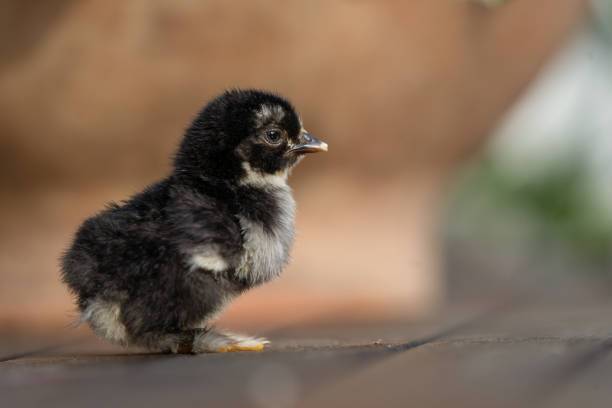
Within the first day of hatch – before the chick is exposed to the virus[reference:61][reference:62]
In ovo (late embryonic development) – at 18-19 days, jump-starting the immune system before hatching[reference:63]
Why Timing Matters:
Birds must receive the vaccine before they are exposed to the virus[reference:64][reference:65]. Administering the vaccine after exposure is ineffective. The vaccine can take up to two weeks to be protective[reference:66] or about 4–7 days[reference:67].
Vaccination in Kenya
In Kenya, Marek's disease vaccine is typically administered at day-old.
Options for Kenyan Farmers:
Order pre-vaccinated chicks from hatcheries (most convenient)[reference:68]
Vaccinate day-old chicks at home – using subcutaneous injection under the skin of the neck
Biosecurity Measures
Vaccination alone is not enough. Combine with strict sanitation to decrease or delay exposure[reference:69].
Key Biosecurity Practices:
Restrict access – limit visitors to the farm
Disinfect equipment – clean feeders, waterers, and tools regularly
Control visitors – use footbaths at entrances; caretakers can carry virus-laden dander on hands, clothing, and shoes[reference:70]
Maintain hygiene – disinfect hands and equipment before handling birds
Keep chicks isolated – keep newly vaccinated chicks separated from older birds for 4–7 days to allow immunity to develop[reference:71][reference:72]
Note: It is almost impossible to completely eliminate the virus from a henhouse through cleaning and disinfection[reference:73]. Once the disease enters a coop, the environment will most likely be contaminated for a very long time (months to years)[reference:74].
Marek's Disease in Kenya: A Real Threat
Marek's disease is a significant concern for Kenyan poultry farmers.
Historical Outbreaks
A documented outbreak occurred in Thika, Kiambu, and Nairobi in 1997. The disease presented as rapid emaciation and depression followed by death.
Causative Factors Identified:
High field infection pressure
Failure to vaccinate
Vaccination failure
Lack of quarantine and other disease control measures
Warning: Failure to institute effective control measures against the disease is likely to seriously affect the poultry industry in Kenya.
Current Situation
Marek's disease is very prevalent everywhere there is poultry. It is one of the major diseases that can wipe out months of hard work in just a few days.
The disease is most commonly seen in the nervous form, with progressive paralysis in one or both limbs. There is no cure, and it brings a high mortality rate.
FAQs: Marek's Disease
Q: Can humans catch Marek's disease?
No. Mammals appear to be refractory to the infection[reference:75][reference:76]. There is no evidence that the disease is a human health hazard[reference:77].
Q: Can ducks and other birds get Marek's disease?
Chickens are the most important natural host[reference:78]. Quail and turkeys can also be infected, especially when raised near chicken farms[reference:79]. The disease has also been reported in pheasants and peafowl[reference:80].
Q: Can I eat eggs from infected chickens?
Yes. The virus does not affect the safety of eggs for human consumption. However, infected hens may show decreased egg production.
Q: How long does the virus survive in the environment?
The virus may survive for months in poultry house litter or dust[reference:81]. It can live for years in dander[reference:82].
Q: Does vaccination cure infected birds?
No. Vaccination prevents the development of tumours and paralysis but does not cure already infected birds[reference:83].
Q: Can I vaccinate adult chickens?
No. Vaccination is only effective when administered within the first day of hatch – before exposure to the virus[reference:84].
Economic Impact
Marek's disease has major economic consequences for poultry operations:
Reduced meat quality
Poor feed conversion
Decreased egg production[reference:85]
Increased susceptibility to secondary infections
Increased mortality
Subclinical decrease in growth rate and egg production[reference:86]
Conclusion: Protecting Your Flock
Marek's disease is a serious threat to poultry farming in Kenya. However, it is entirely preventable through:
Vaccination of day-old chicks – the single most effective measure[reference:87]
Strict biosecurity – limiting exposure to the virus[reference:88]
Good hygiene – regular cleaning and disinfection
Genetic selection – selecting for hardier breeds[reference:89]
Remember: Once clinical signs appear, it is too late[reference:90]. Prevention is the only cure.
Manage Your Flock with Poultry Market KE
Track vaccination schedules, flock health, and disease prevention measures with our complete management system.