Chicken Feed Shop – Your One-Stop Poultry Nutrition Hub in Kenya
Why Chicken Feed Shops Matter for Kenyan Poultry Farmers
Poultry farming in Kenya and East Africa is a vital source of income and nutrition. However, the success of your flock hinges on one critical factor: quality nutrition. A reliable chicken feed shop ensures your birds receive balanced diets tailored to their growth stages, boosting productivity and profitability. Poor feed choices can lead to stunted growth, low egg production, and disease outbreaks. With Kenya’s poultry industry valued at over KES 100 billion annually, access to expert nutrition is non-negotiable [1].
Types of Chicken Feed for Optimal Growth
1. Chick Mash (0–8 Weeks)
- Purpose: Supports rapid growth in young chicks.
- Nutrient Profile: 20–24% crude protein, high calcium, and phosphorus.
- Key Ingredients: Maize, soybean meal, wheat bran, and omena.
- Usage: 2.0 kg per chick for the first 8 weeks.
2. Grower Mash (9–18 Weeks)
- Purpose: Strengthens bones and muscles during adolescent growth.
- Nutrient Profile: 16–18% crude protein, lower fat than starter feeds.
- Key Ingredients: Sunflower cake, maize, and mineral supplements.
- Usage: 1.5–2.0 kg per bird for optimal weight gain.
3. Layer Mash (18+ Weeks)
- Purpose: Ensures high egg production (4–5 eggs/week).
- Nutrient Profile: 15–16% protein, 3.5% calcium (for strong eggshells).
- Key Ingredients: Omena, limestone, and soybean meal.
- Usage: Continuous supply for laying hens.
4. Broiler Starter/Finisher
- Broiler Starter (0–4 Weeks): 22–24% protein to accelerate growth.
- Broiler Finisher (5–8 Weeks): 18–20% protein to fatten birds for market.
- Key Ingredients: Maize, fish meal, and wheat pollard.
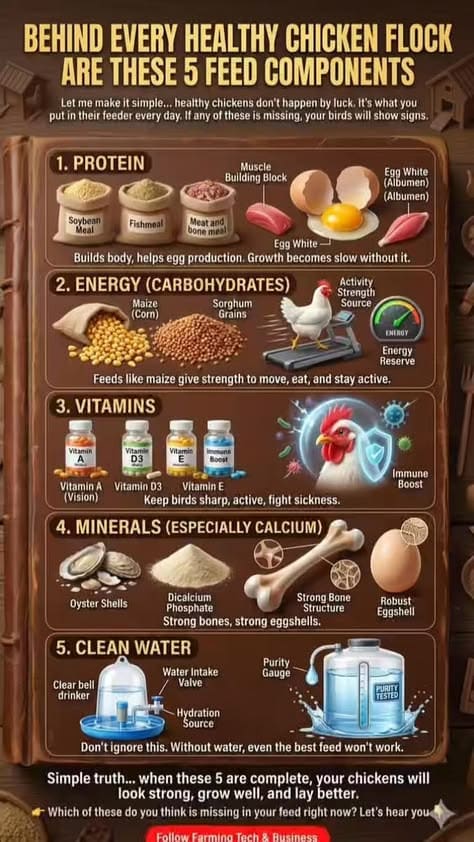
Essential Ingredients in Poultry Feed
| Ingredient | Role in Nutrition | Cost (per kg) | Availability in Kenya |
|---|---|---|---|
| Maize | Primary energy source | KES 50–70 | Widely available |
| Soybean Meal | High-protein for muscle development | KES 80–100 | Imported; stockpiled by agrovets |
| Sunflower Cake | Plant-based protein and fiber | KES 60–80 | Local mills in Nyeri, Thika |
| Omena | Calcium and omega-3 for eggshell strength | KES 120–150 | Lake Victoria region |
| Wheat Bran | B-vitamins and phosphorus | KES 40–60 | Flour mills in Nairobi |
| Wheat Pollard | Energy and digestible fiber | KES 50–70 | By-product of flour milling |
Sources: Internal Knowledge Base, Royal Animal Feeds pricing guide.
Where to Buy Quality Chicken Feed in Kenya
1. Local Agrovets
- Offer 90kg maize bags at KES 4,800 and 70kg layer mash at KES 3,500.
- Provide free advisory on feed mixing and disease prevention.
2. Leading Feed Brands
- Royal Animal Feeds: Distributes in Nairobi, Mombasa, and Eldoret.
- De Heus: Specializes in layer and broiler feeds.
- Belmill: Known for cost-effective grower mash.
- Afrimach: Offers 50kg feed bags for smallholder farmers.
- Fugo Feeds: Popular in western Kenya for high-calcium layers.
How to Choose Quality Chicken Feed
- Check the Label: Look for ISO certification and KEPHIS approval.
- Smell Test: Fresh feed has a neutral odor; sour or moldy smells = contamination.
- Color: Uniform color indicates proper mixing.
- Storage: Buy in quantities that can be used within 3 months to prevent spoilage.
Avoid feeds with excessive fillers like rice hulls or sand.
Starting a Chicken Feed Shop in Kenya
1. Startup Costs
- Initial Investment: KES 1,000,000–2,500,000 (warehouse, machinery, working capital).
- Suppliers: Partner with Royal Animal Feeds or De Heus for bulk discounts.
- Storage: Use rodent-proof silos and desiccants to maintain feed quality.
2. Profit Potential
- Markup: Charge 15–20% above wholesale prices.
- Annual Revenue: KES 500,000–2,000,000+ depending on location and client base.
- Target Markets: Smallholder farms in Nyanza, Rift Valley, and western Kenya.
3. Key Success Factors
- Offer customized feed mixes for free-range vs. deep-litter systems.
- Train farmers on feed-to-weight ratios (e.g., 2.5kg starter feed for 1kg broiler weight gain).
- Provide free trials for new customers.
Conclusion
A reliable chicken feed shop is the backbone of any thriving poultry operation. By sourcing quality ingredients and offering stage-specific feeds, you ensure your flock’s health and productivity. Whether you’re a farmer or an entrepreneur, investing in poultry nutrition is a pathway to long-term success in Kenya’s growing agribusiness sector.
Key Takeaways
- Use chick mash (0–8 weeks), grower mash (9–18 weeks), and layer mash (18+ weeks) for optimal growth.
- Prioritize feeds with maize, soybean meal, and omena for balanced nutrition.
- Partner with trusted suppliers like Royal Animal Feeds or De Heus.
- Start a feed shop with KES 1 million, targeting KES 500k–2 million annual profits.
Call to Action
Ready to streamline your poultry nutrition? Visit Poultry Market KE at www.poultrymarket.app to find verified feed shops, compare prices, and access expert farming guides. Your flock’s success starts with the right feed!
Related Reading
- How to Build a Profitable Broiler Farming Business in Kenya
- Poultry Disease Prevention: Vaccination Schedules for Kenyan Farmers