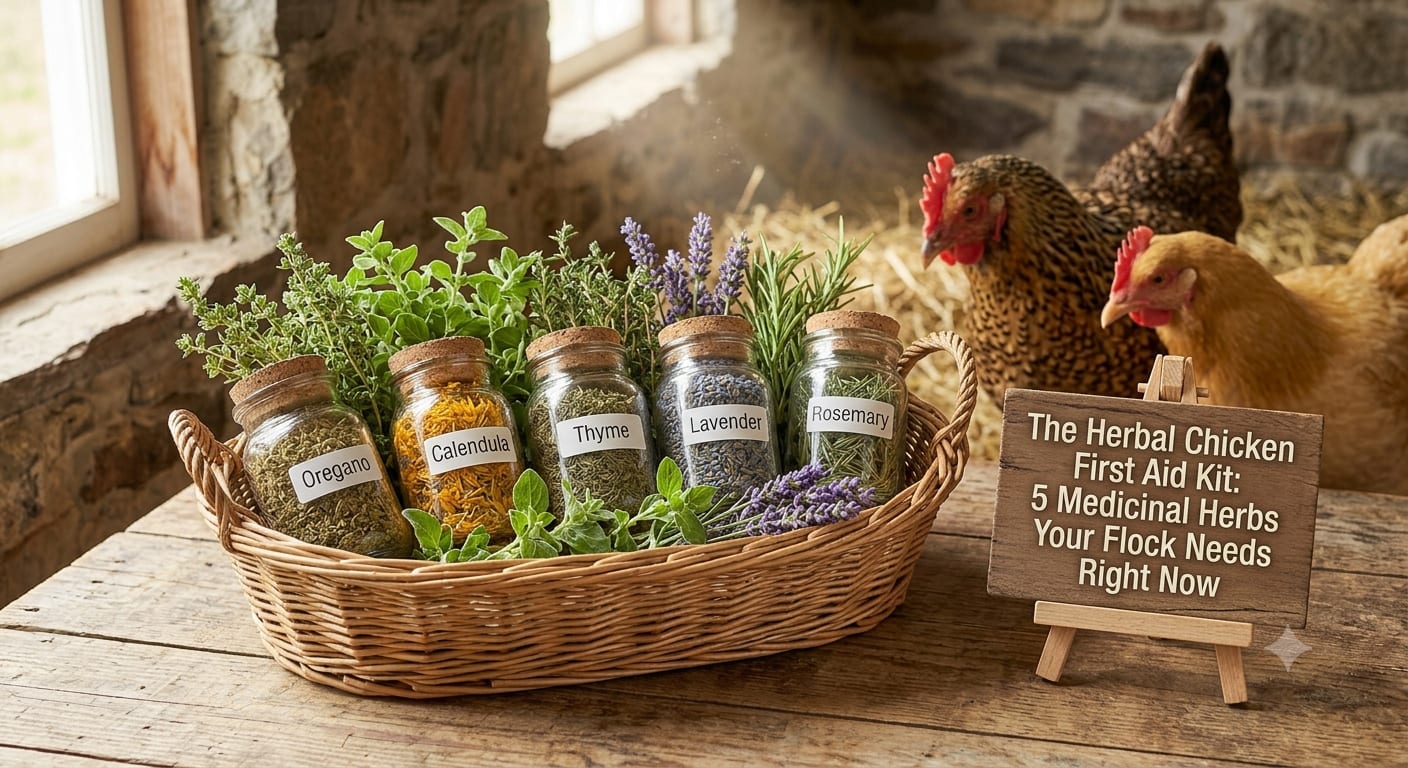
The Herbal Chicken First Aid Kit: 5 Medicinal Herbs Your Flock Needs Right Now

Introduction
Commercial poultry operations often prioritize rapid growth and disease prevention through synthetic antibiotics. However, backyard flocks benefit from natural immune support that aligns with their evolutionary biology. Herbs provide a safe, effective way to address common poultry ailments without harsh chemicals. By creating a herbal first-aid kit, you empower yourself to support your chickens' health holistically while reducing reliance on pharmaceuticals.
The Herbal Breakdown
Oregano – The Natural Antibiotic
Oregano oil and fresh oregano leaves contain carvacrol, a compound with potent antimicrobial properties. During respiratory flare-ups, add 10-15 drops of food-grade oregano oil per gallon of water or sprinkle dried oregano (1 teaspoon per 5 birds) in feed. For best results, use fresh oregano during treatment and rotate with other herbs to prevent resistance.
Garlic – Immune Booster and Natural Dewormer
Garlic enhances immune function and acts as a mild dewormer. Crush 1 clove per 4-5 birds daily during deworming cycles, but reduce to 1 clove per 10 birds for routine immune support. To avoid tainting egg flavor, administer garlic in water (steep crushed cloves for 10 minutes) rather than feed. Never exceed 1 clove per 2 birds.
Lavender – Calming Agent for Stressed Hens
Lavender's calming properties reduce stress during flock introductions or environmental changes. Create a lavender-infused water by steeping 1 tablespoon of dried flowers per gallon of water for 15 minutes. Add this to drinking water for 3-5 days during stressful events. Fresh lavender sprigs can also be placed in nesting boxes for aromatherapy benefits.
Tap to continue reading the full article
Tags
Poultry Market Kenya
@poultrymarketkenya
Poultry Market Kenya is a dedicated poultry farming and agribusiness blog focused on empowering farmers, traders, and agri-entrepreneurs across Kenya. We publish practical, data-driven content covering poultry production, disease management, feeding strategies, housing, equipment reviews, and market insights. Our goal is to bridge the gap between traditional poultry farming practices and modern, profitable methods by providing reliable information, expert guidance, and real-world case studies.