Kienyeji vs. Broilers vs. Layers: A Profitability Analysis for the Kenyan Market

Kienyeji vs. Broilers vs. Layers: A Profitability Analysis for the Kenyan Market
Poultry farming remains one of the most lucrative agricultural ventures in Kenya, offering diverse opportunities for farmers. Among the various poultry types, Kienyeji, Broilers, and Layers stand out due to their distinct market demands, risk factors, and profitability. This article provides an in-depth analysis of these three poultry types, focusing on market demand cycles, ideal customer profiles, and risk factors. We also include a hypothetical 6-month cash flow projection for each to guide potential and existing farmers.
Market Demand Cycles
Understanding the market demand cycles is crucial for any poultry farmer. Here’s a breakdown of the demand patterns for each poultry type:
Kienyeji Chickens
- Demand Cycle: Kienyeji chickens have a steady demand throughout the year, with peaks during festive seasons such as Christmas, Easter, and Eid. The demand is also high in rural areas where traditional poultry farming is preferred.
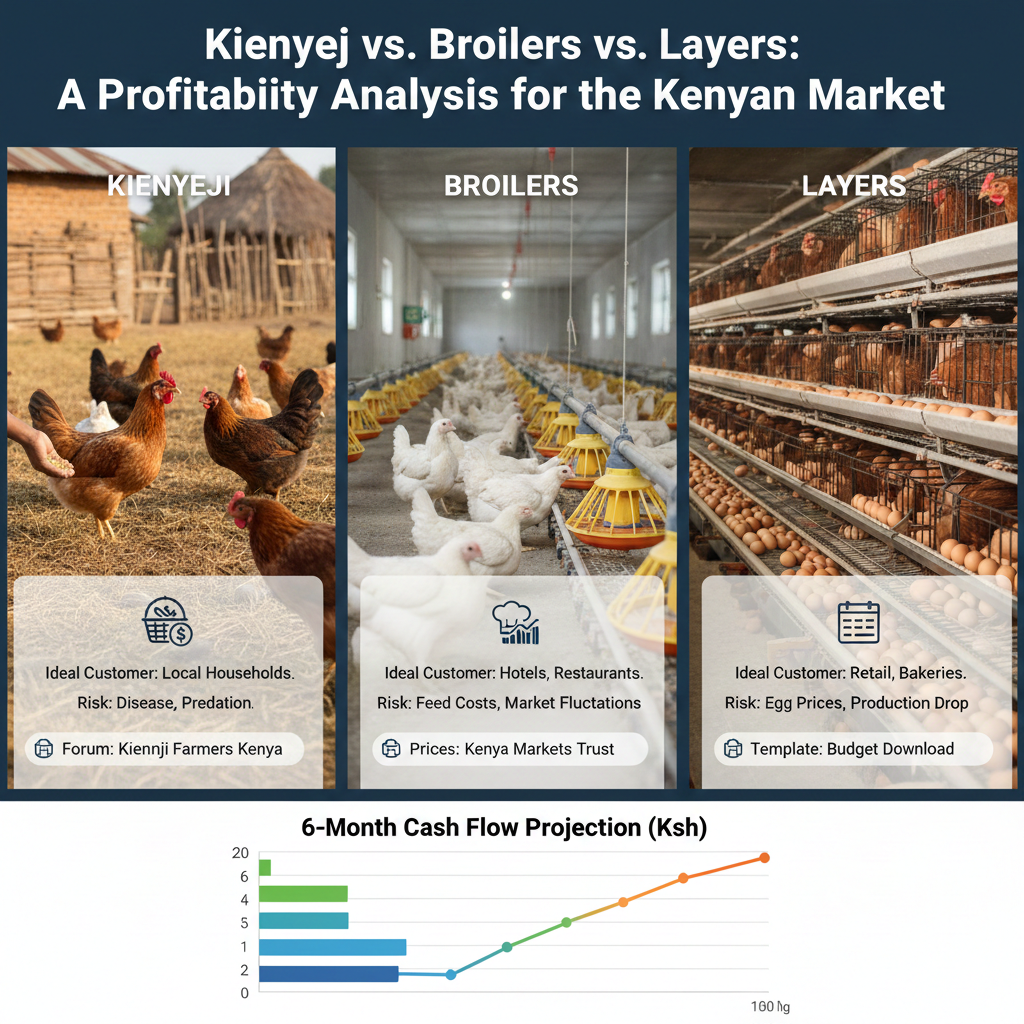
- Ideal Customer Profile: Local households, small-scale hotels, and cultural events.
- Risk Factors: Disease outbreaks, predation, and slow growth rates can impact profitability.
Broilers
- Demand Cycle: Broilers have a high demand in urban areas, particularly in fast-food joints, hotels, and restaurants. The demand is consistent but can spike during holidays and social gatherings.
- Ideal Customer Profile: Hotels, restaurants, fast-food chains, and local households.
- Risk Factors: High feed costs, disease susceptibility, and market saturation can pose significant risks.
Layers
Tap to continue reading the full article
Poultry Market Kenya
@poultrymarketkenya
Poultry Market Kenya is a dedicated poultry farming and agribusiness blog focused on empowering farmers, traders, and agri-entrepreneurs across Kenya. We publish practical, data-driven content covering poultry production, disease management, feeding strategies, housing, equipment reviews, and market insights. Our goal is to bridge the gap between traditional poultry farming practices and modern, profitable methods by providing reliable information, expert guidance, and real-world case studies.