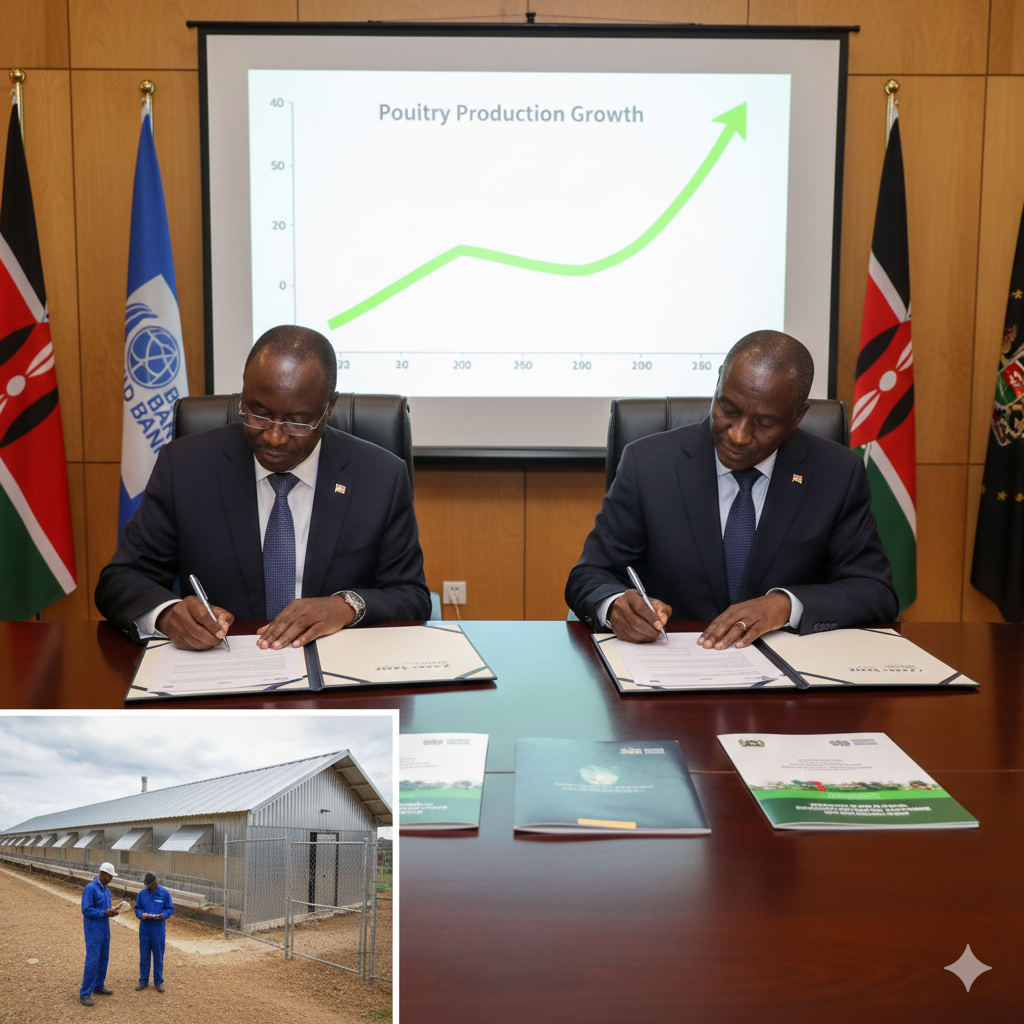
In a landmark move set to revolutionize the national poultry sector, Kenya has unveiled an ambitious World Bank-backed plan to dramatically scale up its poultry production. This strategic initiative aims to more than triple the current output, projecting an increase from an estimated 78,000 birds in 2024 to an impressive 240,000 birds by 2027. This expansion is a critical step towards enhancing food security, creating economic opportunities, and reducing reliance on poultry imports, positioning Kenya as a regional leader in poultry farming.
The initiative, supported through a memorandum signed in 2024, underscores the World Bank's commitment to bolstering Kenya's agricultural value chains and empowering smallholder farmers. This aggressive growth trajectory is not just about numbers; it's about building a sustainable, resilient, and profitable poultry industry for all stakeholders, from small-scale farmers to large commercial enterprises, feed manufacturers, veterinarians, and students aspiring to enter the sector.
Program Overview: A Vision for Poultry Prosperity
The Kenya poultry production expansion 2025 program is meticulously structured into phases, designed to ensure steady and sustainable growth. The overarching goal is to achieve a 300% increase in production, a testament to the nation's dedication to agricultural transformation. This significant scaling up will be achieved through a multi-pronged approach encompassing financial support, technical assistance, and capacity building.
Production Timeline
Year
Target Production (Birds)
2024
78,000 (Baseline)
2025
120,000
2026
180,000
2027
240,000
This phased growth ensures that infrastructure, market absorption, and farmer capabilities evolve in tandem, preventing bottlenecks and maximizing success.
Government Incentives and Support
To facilitate this rapid expansion, the Kenyan government, in collaboration with the World Bank, is rolling out a comprehensive package of incentives:
Subsidized Feeds: Access to affordable, high-quality poultry feeds to reduce operational costs for farmers.
Vaccination Programs: Nation-wide vaccination drives and subsidized vaccines to protect flocks against prevalent diseases, enhancing poultry health and reducing mortality.
Training Grants: Financial support for farmers to access modern poultry management training, covering areas like brooding, nutrition, disease prevention, and market access.
Technical Assistance: Expert guidance on farm planning, biosecurity measures, and efficient production techniques.
Market Linkages: Initiatives to connect smallholder farmers with larger markets and value chains, ensuring consistent demand and fair prices for their produce.
Funding Details: Investing in Kenya's Poultry Future
The World Bank's backing for this expansion is part of its broader commitment to agricultural development in Kenya, which includes significant investments in strengthening value chains and supporting smallholder farmers. While specific figures directly allocated to the 78,000 to 240,000 birds expansion are integrated within larger agricultural development frameworks, the initiative leverages substantial resources aimed at transforming Kenya's agricultural landscape.
This funding ensures that critical resources are available for infrastructure development, farmer grants, research, and capacity building, laying a strong foundation for sustainable growth in the poultry sector.
Eligibility Criteria: Who Can Participate?
The program is designed to be inclusive, targeting a wide range of participants in the poultry value chain. Eligibility criteria generally include:
Smallholder Farmers: Individuals or groups with existing poultry operations, demonstrating a commitment to scaling up.
Youth and Women Groups: Special provisions to encourage participation from these vital demographic groups.
Poultry Cooperatives: Registered cooperatives seeking to expand collective production and processing capabilities.
Agri-SMEs: Small and medium-sized enterprises involved in poultry farming, feed production, or related services.
Applicants typically need to demonstrate a viable business plan, access to suitable land, and a willingness to adopt best practices and participate in training programs. Local administrative offices and designated agricultural extension services will provide detailed guidance on specific requirements.
Application Process: Your Path to Growth
Prospective participants are encouraged to engage with local agricultural extension officers and county-level agricultural departments. The application process generally involves:
Information Sessions: Attending workshops and seminars to understand program details and requirements.
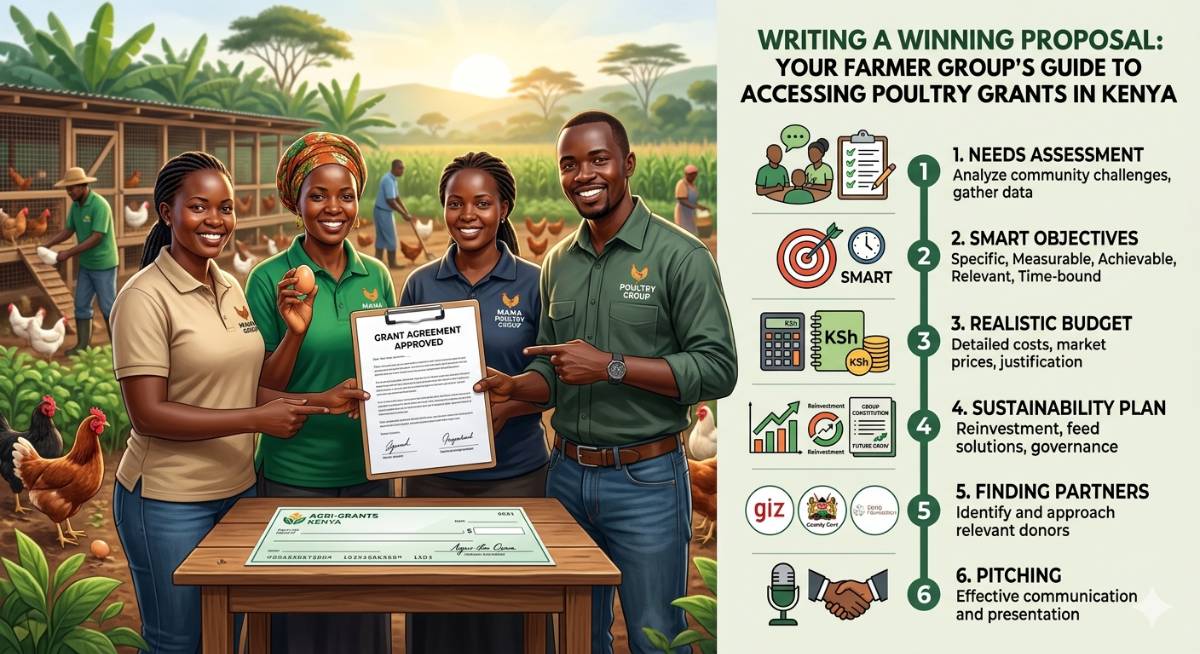
Application Submission: Completing and submitting application forms with required documentation, including farm details, production history, and expansion plans.
Farm Assessments: On-site evaluations by agricultural experts to verify capacity and potential.
Training & Capacity Building: Selected participants undergo training on modern poultry farming techniques and financial management.
Grant Disbursement & Support: Approved beneficiaries receive financial aid and ongoing technical support.
The success of this ambitious program will be measured not only by the increase in bird numbers but also by its broader socio-economic impact:
Increased Income for Farmers: Improved livelihoods for smallholder farmers through higher sales and reduced costs.
Enhanced Food Security: A steady supply of affordable, high-quality poultry products for Kenyan households.
Job Creation: New employment opportunities across the poultry value chain, from farm labor to processing and distribution.
Technological Adoption: Widespread adoption of modern, sustainable poultry farming practices.
Reduced Imports: Significant decrease in reliance on imported poultry products, boosting local industry.
Inspiring Success: Case Studies from the Field
The initial phases of this expansion are already witnessing inspiring stories of transformation. Here are three examples of farms that have benefited from similar government and World Bank-backed agricultural initiatives:
Case Study 1: Kiprotich's Layer Farm, Kericho County
Mr. Kiprotich, a smallholder farmer in Kericho, started with 500 layers. Through a government training grant and subsidized feed program, he expanded his operations to 2,000 layers. He attributes his success to consistent technical advice and access to quality feed. "The support allowed me to see poultry farming not just as a side hustle, but a viable business," he states.
Case Study 2: Maendeleo Poultry Cooperative, Machakos County
This cooperative of 15 women farmers in Machakos received a grant to upgrade their communal brooding facilities and access improved broiler chicks. Their collective production jumped from 1,500 broilers per cycle to 5,000, creating a reliable income stream and empowering the women to invest in their families' education and health. Their story exemplifies the power of collective action and strategic support.
Case Study 3: Agri-Innovators Ltd., Nakuru County
A young entrepreneur, Ms. Akinyi, launched Agri-Innovators Ltd. with a vision for sustainable poultry. With a World Bank-linked grant focusing on value addition, she invested in automated feeding systems and a small-scale processing unit for her 3,000-bird farm. This allowed her to sell processed chicken directly to local hotels, significantly increasing her profit margins. She's now exploring expansion to 10,000 birds.
These success stories are just a glimpse of the potential unleashed by strategic investment and support in the poultry sector. They highlight the tangible benefits for individual farmers and the broader community.
Conclusion: A Bright Future for Kenya's Poultry Industry
The World Bank-backed Kenya poultry production expansion 2025 program represents a monumental leap forward for the nation's agricultural sector. By aiming to triple production to 240,000 birds, Kenya is not just setting a numerical target but is laying the groundwork for widespread economic empowerment, enhanced food security, and a robust, modern poultry industry. This is an opportune moment for poultry farmers, feed makers, poultry companies, veterinarians, and students to actively engage, learn, and contribute to this transformative journey. The future of poultry in Kenya is vibrant, promising growth and prosperity for all.
Poultry Market Kenya is a dedicated poultry farming and agribusiness blog focused on empowering farmers, traders, and agri-entrepreneurs across Kenya. We publish practical, data-driven content covering poultry production, disease management, feeding strategies, housing, equipment reviews, and market insights.
Our goal is to bridge the gap between traditional poultry farming practices and modern, profitable methods by providing reliable information, expert guidance, and real-world case studies.