Feed is the single biggest cost in poultry keeping, and if you've priced a bag of layers mash recently, you already know it. Now imagine cutting part of that bill using nothing more than a few plastic trays, some grain, water, and a corner of your house. That's exactly what sprouted fodder offers — fresh, living green feed grown indoors in about six days, with no soil, no land, and no waiting for the rains to come.
What Is Fodder, and Why Bother?
Fodder is simply grain — barley, wheat, maize, sorghum, or millet — that has been soaked and sprouted into a mat of young green shoots and roots. Think of it as the middle ground between dry grain and pasture. The seed germinates, the shoot grows, and within about a week you have a lush green biscuit of feed your chickens will tear into eagerly.
Why does this matter for your flock? Sprouting changes the grain itself. The germination process unlocks nutrients, increases certain vitamins, and makes the feed easier to digest. Green fodder also adds variety and natural greens to the diet — something poultry training manuals have long recommended, noting that vitamins can be locally harnessed from greens. For birds confined indoors or in a small urban run, that fresh green material is a genuine upgrade.
There's also the cost angle. One kilogram of dry grain can produce roughly four to six kilograms of fresh fodder, depending on your conditions and technique. That multiplication of weight is mostly water, so fodder should complement your balanced feed, not replace it entirely. But even replacing a modest share of purchased feed adds up over a month.
What You Need to Get Started
The beauty of fodder is how little equipment it requires. A basic setup includes:
- Trays — shallow plastic trays, old baking sheets, or even cut-down jerricans with drainage holes punched in the bottom
- Seed — barley and wheat are popular choices, but sorghum, millet, and maize work too; use clean, untreated seed meant for planting or feed, not seed coated with chemicals
- Water — for soaking and daily rinsing
- A shelf or rack — to stack trays vertically and save floor space
- Indirect light — a bright room or simple LED light is enough; you're not growing a full crop
If you're raising chickens in a Nairobi flat or a small compound, this is one of the few feed strategies that genuinely fits your situation. No land required.
The 6-Day Process, Step by Step
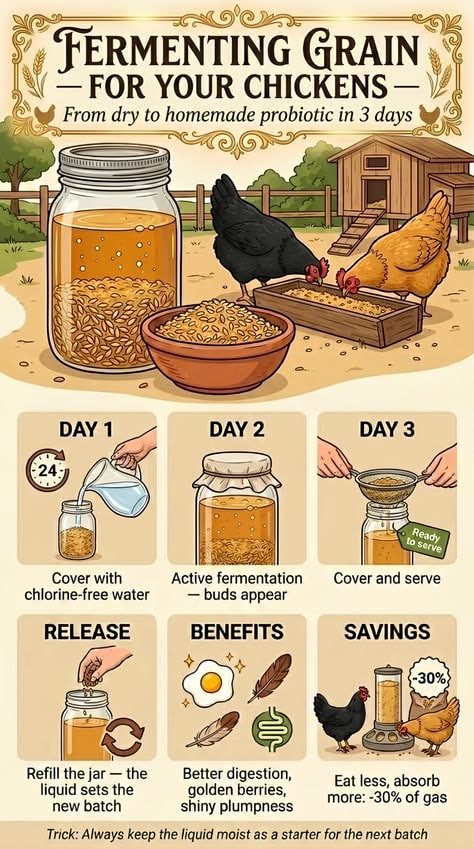
Day 1: Soak the Seed
Rinse your grain thoroughly, then submerge it in clean water for 8 to 12 hours. Overnight works perfectly. This soaking wakes the seed up and triggers germination. Use roughly enough seed to cover your tray about half an inch deep once spread — packing it thicker invites mold.
Day 2: Drain and Spread
Drain the soaked seed well and spread it evenly across your tray. Keep it moist but never sitting in water. Mist or sprinkle water two to three times a day. By the end of day two, you should see tiny white root tips emerging.
Days 3–4: Rinse, Drain, Repeat
This is the routine that makes or breaks your fodder. Rinse or mist the sprouts two to three times daily and always let excess water drain away. Stagnant water is how mold and sour smells start. During these days the roots knit together into a mat and the first green shoots appear.
Days 5–6: Green Up and Harvest
Give the trays good indirect light so the shoots turn a rich green. By day six, you should have a dense mat of shoots roughly 10 to 15 centimeters tall. Lift the whole mat out, tear off a section, and toss it to your birds. They'll eat the shoots, the seed remnants, and the roots — nothing goes to waste.
Keeping the Cycle Going
One tray gives you one harvest. A small rotation gives you fodder every single day. The trick is staggering your batches: start a new tray each day so that while one tray is being harvested, five others are at different stages of growth. Six trays on a simple rack, one started daily, means a continuous supply with about fifteen minutes of work per day.
How much should you grow? As a rough example, if you want to offer each bird a small daily portion of fodder — say 30 to 50 grams as a supplement alongside their regular feed — a flock of 50 birds needs about 1.5 to 2.5 kilograms of fresh fodder daily. Since one kilogram of dry seed yields several kilograms of fodder, a few hundred grams of seed per day can cover that. Adjust based on how your birds respond and how much of their diet you want fodder to represent.
Common Mistakes That Ruin Fodder
Most fodder failures come down to a handful of avoidable errors:
- Spreading seed too thick. Dense seed overheats and molds from the inside out. Half an inch is plenty.
- Letting trays sit in water. Drainage holes are non-negotiable. Wet feet kill sprouts.
- Skipping rinses. Irregular watering stalls growth and encourages bacteria.
- Using treated or old seed. Poor germination wastes your time and money.
- Feeding moldy fodder. If a tray smells sour or shows fuzzy gray or black growth, discard it. Never gamble with your flock's health.
Where Fodder Fits in the Bigger Feeding Picture
Be realistic about what fodder can and cannot do. Your birds still need a balanced ration with adequate protein, energy, and minerals — the same principle behind standard broiler and layer diets, which are formulated to specific protein levels for good reason. Fodder is best viewed as a high-quality supplement that stretches your purchased feed, improves bird welfare, and adds fresh greens to the diet year-round, regardless of weather or season.
It also won't fix poor management elsewhere. Clean water, good housing, and proper stocking density still do the heavy lifting for flock performance.
Getting Started This Week
You don't need to build a full system today. Start with one tray and a kilogram of barley or wheat. Run a single six-day cycle, watch how your birds respond, and then decide whether to scale up to a daily rotation. The investment is small enough that the experiment costs you almost nothing.
How much of your feed bill do you think fresh fodder could realistically replace on your farm? Try a tray and find out — then come back and share your results in the comments. If you found this guide useful, pass it along to another poultry keeper who's feeling the pinch of feed prices, and follow Poultry Market for more practical, hands-on guides to help your flock — and your budget — thrive.