Cutting Costs, Not Quality: A Practical Guide to Mixing Your Own Poultry Feed
Every poultry farmer in Kenya knows the struggle: you check your egg sales, you check the price of a 50kg bag of commercial layers mash, and you realize your profits are razor-thin. Feed alone can account for up to 70% of your total production costs.
When commercial feed prices spike, many farmers opt to cut down rations, which only leads to a decrease in egg production or stunted growth. But there is a better way to protect your margins: home-mixing your own feed using locally available ingredients.
By understanding the basic nutritional needs of your flock and sourcing raw materials smartly, you can shave up to 30% off your feed bill without compromising on egg size or bird health. Here is how to get started safely.
1. The Golden Rule: Balance the Big Three
You can’t just throw random grains into a mixer and hope for the best. To keep your birds productive, your homemade mix must balance three critical elements:
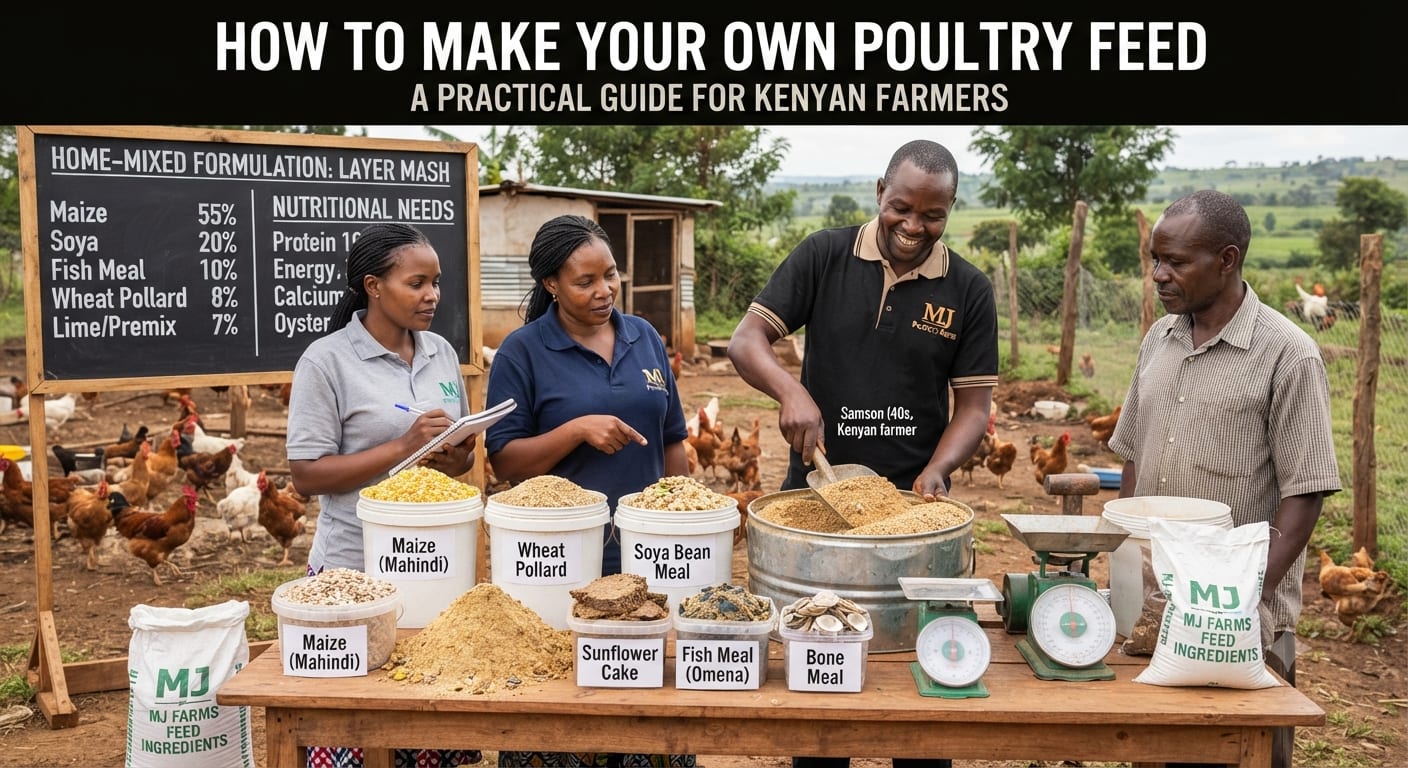
- Energy (Carbohydrates): This keeps the birds active and warm. Whole maize, maize germ, and wheat pollard are excellent, readily available energy sources in Kenya.
- Protein: Crucial for muscle growth and egg formation. Soya bean meal and sunflower cake are standard, but Omena (fish meal) or black soldier fly larvae are fantastic high-protein options.
- Vitamins & Minerals: Essential for bone strength and eggshell quality. You’ll need limestone flour or crushed oyster shells for calcium, plus a quality commercial poultry premix.
2. A Proven 100kg Layers Mash Recipe
If you want to try a baseline recipe for a standard 100kg batch of Layers Mash (for birds from 18 weeks onwards), here is a balanced formula that utilizes local ingredients:
Tap to continue reading the full article