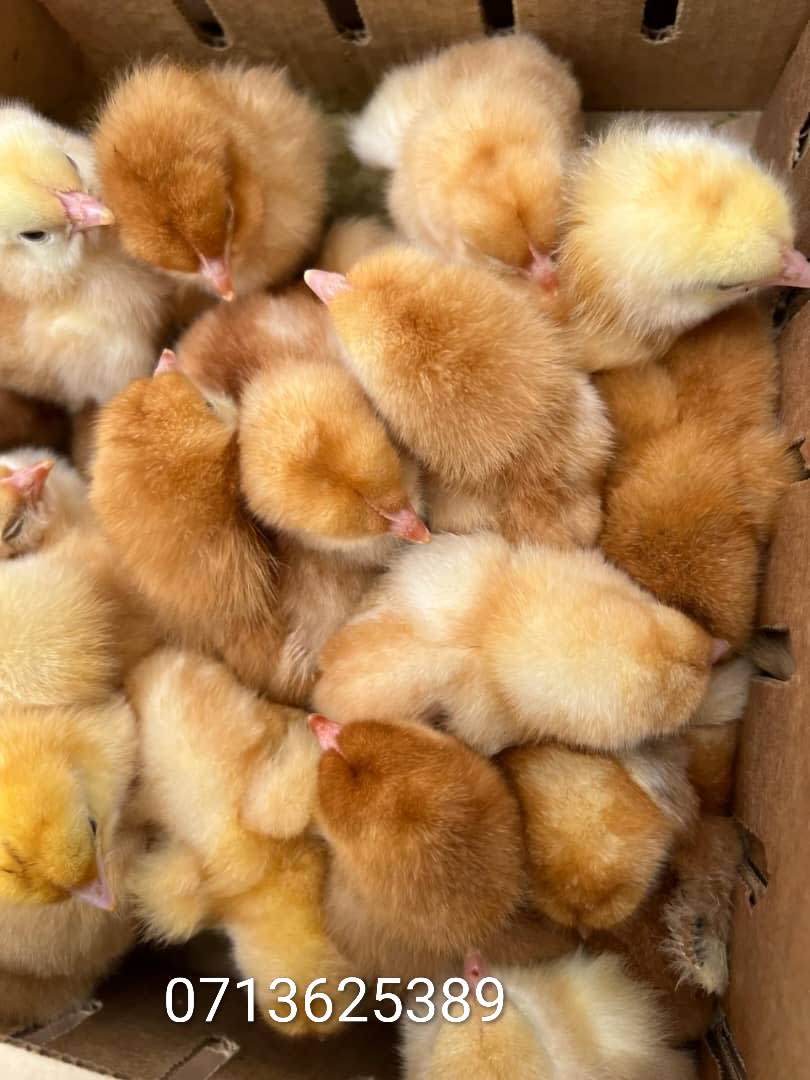
Knowing the sex of young chicks (day-olds and new hatchlings up to a week of age) is an important skill for good flock management, feed conversion and profitability in poultry. For smallholder and commercial farmers in Kenya and East Africa, males can be separated from females early to provide optimised rearing of layers and broiler breeds, respectively, and thus reduce costs and optimise production. This publication describes visual techniques, which are backed up by scientific evidence, to enable you to sex your chicks during the first week after hatching: wing feather sexing and tail feather sexing.## The Importance of Early Chick SexingSexing chicks at day-old or within the first few weeks is vital for several reasons:(3)2.6.1. Feed efficiency: the female newly hatched chickens (pullets) are raised to produce eggs, and thus have a lighter body weight and different nutrition and housing needs than the male newly hatched chickens (cockerel).- Space (accommodation and stocking density) - layers and broilers are different in their housing and stocking density.- Profitability- Early sex separation saves resources (birds which aren‘t desired e.g. males in a layer flock).Although vent sexing is the most accurate, it‘s also the most difficult, requiring training. Visual techniques such as feather sexing can be of value to farmers. Poultry Extension states that, “poultry sexing at day-old is difficult because of the internal location of male reproductive organs”.## Wing Feather Sexing: Step-by-Step Guide### Step 1: Observe Primary and Secondary FeathersLook at the wing coverts - feathers covering the base of the wing and primary flight feathers- the long stiff feathers at the tip of the wing. For sex-linked breeds (e.g. ISA Babycoms, Nick Marshall), differences are apparent within 48 hours:• Female Chicks (Pullets): Usually possess a shorter primary and longer secondary feathers, giving the “ragged” wing look.- Male Chicks (Cockerels): Have “longer” primary and “shorter” secondary flight feathers which will make the appearance of the wing look “neat”.### Step 2: Compare Feather Length TiersHold the chick securely but gently. Spread the wing to observe the feather tiers:- Pullets often have the biggest (longest) feather in the wing being the secondary covert.- Cockerels. The longest feather is the..............., so the list goes as...This method is most effective on breeds with clear sex-linked feathering, as discussed in The Art of Doing Stuff, which reduces in non-sex-linked breeds to 80-90%.## Tail Feather Sexing: Recognizing Development PatternsTail feather development is another reliable indicator, particularly in the first 7 days:### Step 1: Inspect Tail Feather Growth- Pullets.: The tail feathers (rachis) develop more rapidly and less curved than in the cock. At 5 days, the female will also display a more developed “fan” shape.• Cockerels: Tail feather development is slower and the feathers “flick out”, resulting in a less distinct fan shape.### Step 2: Make comparisons with wing feathers: - Find the symmetrical position of the comet. - Find similarity between wings and the comet.In sex-linked breeds, the tail and wing feather patterns align:- For a chick with a neat wing (with long primary feathers) and with a curled tail, it is probably a male.- female:- For female, a ragged wing and straight, fast grown tail.## Practical Tips for East African Farmers1. [1] Choose ( unless betting on sex) [2] sex-linked breeds(ms exceptions) like ISA Babycoms, Lohmann Vitiv for the increased accuracy of feather sexing.2.** Use Calipers**. Use small Calipers to measure feather lengths (for commercial hatcheries).3. Confirm with Vent Sexing In high stake tasks (e.g. purebred layer flocks), complementarize the visual in confi rm with vent sexing.4. Record the observations:. Keep a record of the accuracy of your sexing by breed so that you can improve your technique.## Limitations and Best PracticesIncorrect sexing : Feathers sexing is 90–95% accurate in sex-linked breeds but 70–80% in non-sex-linked breeds [The Art of Doing Stuff ].- Age Window: The best age window for use of tail and wing sexing is within the 1 st5 days of hatch.Position – try to keep in as good light as possible, do not place in the shade or in a dark corner as then an incorrect length of feather may be indicated.## Enhancing Profitability Through Early SexingAccurate sexing enables farmers to:- Ensure the correct use of resources (air provision at the right levels, layer feed for pullets, broiler rations for cockerels).- Improve housing (rearing platforms for layers need 400–500 cm 2 per bird, broilers require 700–900 cm 2).- Lower the mortality rate through avoiding congestion and undue excitement.For example, a farm managing 1,000 ISA Babycoms can potentially save up to KES50,000 in feed costs by sexing correctly at a young stage. This is a significant saving in Kenya where smallholder farms tend to have flocks of 50-500 birds.## Conclusion and Call-to-ActionWith t W & T knowhow, East African poultry producers are able to utilize data for decision making, improve flock health, and generate more cash. Though these methods take time to master, they are an affordable alternative to traditional lab testing. Integrate visual sexing with repeat training and tools from Poultry Market Kenya to grow a successful poultry enterprise.If you liked the guide kindly support, follow, like, comment and share with friends through this platform. We can make East Africa a thriving poultry Farming community!## Key Takeaways1. Use wing feather length differences to sex day-old chicks in sex-linked breeds.2. Observe tail feather growth patterns for additional accuracy.3. Combine visual methods with vent sexing for critical operations.4. Obtain good quality day old chicks and professional advice from Poultry Market Kenya
References
-Top Quiet Chicken Breeds for Backyard and Suburban Farming in Kenya -When to Move Chicks to the Coop -Understanding Histoplasmosis in Poultry Farming